



MANILA – The Office of the Ombudsman has found probable cause to charge with graft the Department of Agriculture secretary during the administration of then President Benigno Aquino III over the so-called garlic anomaly.
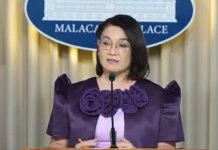
Proceso Alcala and 23 others were charged with violation of the Anti-Graft and Corrupt Practices Act, Ombudsman Conchita Carpio-Morales said yesterday.
Also in the charge sheet were Bureau of Plant Industry (BPI) director Clarito Barron, BPI Division chiefs Merle Palacpac and Luben Marasigan, and garlic traders Lilia “Lea” Cruz, Edmond Caguinguin, Rolan Galvez, Rochelle Diaz, Ma. Jackilou Ilagan, Jon Dino De Vera, Napoleon Baldueza, Jose Ollegue, Laila Matabang, Angelita Flores, Gaudioso Diato, Denia Matabang, Jose Angulo Jr., Raffy Torres, Mary Grace Sebastian, Renato Francisco, Rolando Manangan, Orestes Salon, Prudencio Ruedas, and Shiela Marry Dela Cruz.
Ombudsman investigators discovered that 8,810 import permits (IPs) were issued and approved by Alcala, Barron, Palacpac, and Marasigan between 2010 and 2014 even when the suspension order for such was still in effect.
Importers and affiliates of the Vendors Association of the Philippines Inc. (VIEVA) chaired by Cruz bagged 5,022 of the permits that were issued.
“Records show that on July 24, 2013 Alcala designated Cruz as chairperson of the National Garlic Action Team (NGAT) serving as DA’s consultative body on policies and concerns of the garlic production and supply program,” Carpio-Morales said.
“At the same time, Cruz acted as representative of the garlic importers, assisting them in the processing of applications and issuance of IPs,” she added.
NGAT issued a resolution on Aug. 22, 2013suspending the issuance of IPs on the premise that garlic supply was sufficient to last until the next harvest season in March 2014.
The team issued another resolution on Nov. 5, 2013 declaring the supply of garlic in the country as insufficient as of Oct. 25 that year, and recommended the importation of 58,240 metric tons of garlic through the issuance of IPs, 70 percent of which would be allocated to farmer cooperatives and 30 percent to legitimate garlic importers.
But it was discovered by the Ombudsman that the allocation of the garlic supply “was actually a scheme designated to control the garlic importation” and “enabled VIEVA to monopolize the garlic supply, allowing it to dictate its market prices.”
The Ombudsman also observed an “extraordinary and alarming spike” in the prices of imported and locally produced garlic from January to July 2014, especially in the month of June.
The anti-graft body said the price of imported garlic during the seven-month period increased between P260 and P400 per kilogram from an average of P165 to P170 per kg in 2010 to 2014. The price of native garlic surged from P250 to P400 per kg from April to June 2014./PN