



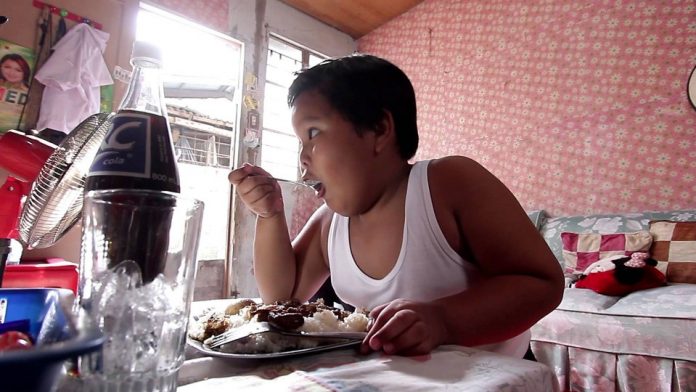
ILOILO City – One in every 100 preschool children in Western Visayas is obese, according to the National Nutrition Council (NNC). It may be a reflection of an economy doing well but it has risks, too. The World Health Organization (WHO) defines obesity as abnormal or excessive fat accumulation that presents a risk to health.
It is a major risk factor for a number of chronic diseases, including diabetes, cardiovascular diseases and cancer.
The prevalence of obesity among preschool children in Region 6 in 2017 was 1.13 percent – up from 0.95 percent in 2016 and 1.09 percent in 2015, NNC data showed.
Obesity has reached epidemic proportions globally, according to WHO, with at least 2.8 million people dying each year.
At 1.45 percent, Iloilo province had the highest prevalence of obesity among preschoolers in Western Visayas. NNC data showed Capiz a close second 1.20 percent.
Once associated with high-income countries, obesity, according to WHO, is now also prevalent in low- and middle-income countries, particularly in urban settings.
NNC regional nutrition program coordinator Nona Tad-y said the prevalence of obesity in Iloilo and Capiz may be attributed to the growing economies of these provinces, particularly their urban centers where access to food is easy.
NNC’s Operation Timbang Plus 2017 showed the following prevalence of obesity in other Western Visayas provinces: Aklan, 0.87 percent; Antique, 0.74 percent; Negros Occidental, 0.74 percent; and Guimaras, 0.48 percent.
Globally, according to WHO, 41 million preschool children were overweight in 2016. Overweight children, it said, were likely to become obese adults and develop diabetes and cardiovascular diseases at a younger age, which in turn were associated with a higher chance of premature death and disability.
The Top 3 Western Visayas municipalities in obesity prevalence were Pavia, Iloilo (1.51 percent), Sapian, Capiz (1.27 percent) and Santa Barbara, Iloilo (1.25 percent).
In the city category, the Top 3 were Bacolod City (3.20 percent), Iloilo City (2.07 percent) and Victorias City (1.65 percent).
According to WHO, an increased consumption of energy-dense food, without an equal increase in physical activity, leads to an unhealthy increase in weight.
Decreased levels of physical activity, it added, will also result in an energy imbalance and lead to weight gain.
Tad-y said local government units play a key role in combatting obesity. She urged them to have nutrition plan or programs that promote healthy diet.
WHO, meanwhile, said social and economic development as well as policies in the areas of agriculture, transport, urban planning, environment, education, food processing, distribution and marketing influence children’s dietary habits and preferences as well as their physical activity patterns.
Eating a healthy diet can help prevent obesity. WHO said children and even adults should:
* limit total fat intake and shift fat consumption away from saturated fats to unsaturated fats
* increase consumption of fruits, vegetables, whole grains and nuts
* limit intake of free sugars and salt/PN