


ILOILO City – Despite extensive reminders from the Department of Health (DOH) in Western Visayas, along with the Philippine National Police (PNP) and local government units (LGUs), the outlawed boga is still the most common cause of fireworks-related injuries (FWRI).
Western Visayas had 31 boga-caused injuries out of 68 FWRIs recorded from Dec. 21 to Jan. 1, recent data from DOH Region 6 released on Monday morning, Jan. 1, showed.
Boga, or PVC cannon, is a modern version of the bamboo cannon and a popular improvised noisemaker during the holidays.
Here’s the breakdown of 68 FWRIs in the region:
* Aklan – four
* Antique – four
* Capiz – five
* Guimaras – one
* Negros Occidental – 25
* Bacolod City – four
* Iloilo province – 25
Iloilo City has zero cases of FWRI as of this writing.
DOH-6 director Dr. Adriano Suba-an, in a press release, said a total of 37 blast/burn injuries were recorded out of 68 FWRI, followed by 28 eye injuries, two blast burns with amputation, and one blast/burn with no amputation.
“Most cases involved are males aged from one to 20 years old, and the firecrackers with the most cases of involvement are boga,” it said.
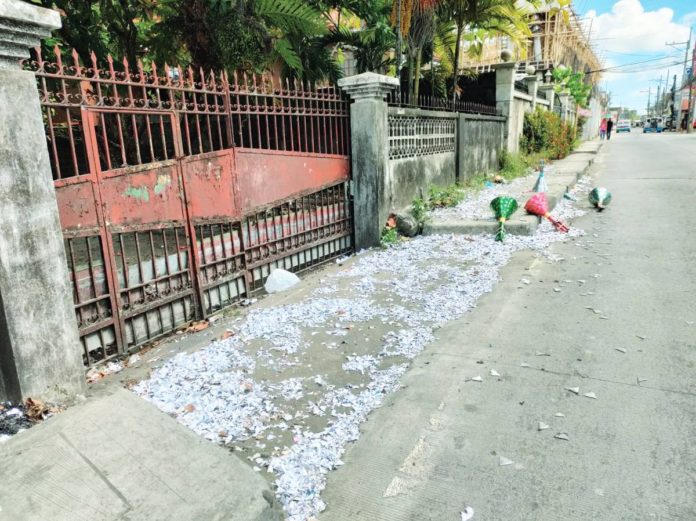
It is followed by trianggulo, camara, watusi, and others such as baby rockets, bamboo canons, and flying tigers, among others.
There were zero cases of fireworks ingestion or stray bullet injuries, said DOH-6.
Of the 68 FWRIs, 11 injuries were reported from sentinel hospitals, including Western Visayas Medical Center in Mandurriao district, Iloilo Mission Hospital in Jaro district, Western Visayas Sanitarium and General Hospital in Santa Barbara, Iloilo, and Corazon Locsin Montelibano Memorial Regional Hospital in Bacolod City, while the remaining 57 injuries were reported from non-sentinel hospitals.
Suba-an further said 62 cases were treated and sent home, four were admitted to the hospital, and two were referred to another hospital.
“The DOH continues to champion for everyone’s safety, especially during the holiday festivities. Together with our agencies and LGU partners, our top priority has always been ensuring that every Filipino family is healthy and safe. Let us step into the new year with a safe body and a healthy mind,” read part of Suba-an’s statement.
Nurse Rodnie I. Gonzales, Health Education Promotion Officer (HEPO) II, and head of the Communications Management Unit of DOH-6, said most of the injured persons from boga were passive or were not directly using it.
“Kalabanan sang aton injuries are, of course, from boga. Some of those are passive victims; indi directly nga sila ang nagapalupok, but nagalabay lang sila or bystanders lang sila, amo na ang trend sang aton victims,” Gonzales said in an interview with Radyo Pilipinas Iloilo.
The health department is thankful that FWRI cases have decreased by 66 percent this year compared to the same period last year, which reached 202 cases.
This was attributed to the active involvement and awareness of the public as a result of the campaign of the DOH-6, together with the PNP and LGUs, on alternative ways to celebrate the New Year.
In the guidance for safe and healthy holiday celebrations released by DOH-6, here are some tips on how to prevent fireworks-related injuries:
* Do not use fireworks and firecrackers to avoid accidents and injury.
* Use safer alternatives to firecrackers and pyrotechnic devices.
* Do not pick up unexploded fireworks with your hands.
* Know your emergency hotlines and first aid.
The surveillance system of the DOH-6 for the Iwas Paputok started on Dec. 21, 2023, and lasts until Jan. 5, 2024.
From Dec. 20 until Jan. 4., hospitals in the region have been on “code white” alert. All manpower and healthcare facilities are on standby for a possible surge of cases.
The Regional Health Emergency Operation Center of the DOH-6 is also on duty to cater to the needs of health facilities, such as medicines and medical supplies.
The hotline number 0939-988-1818 of the Health Emergency Management Staff of DOH-6 is also open./PN