



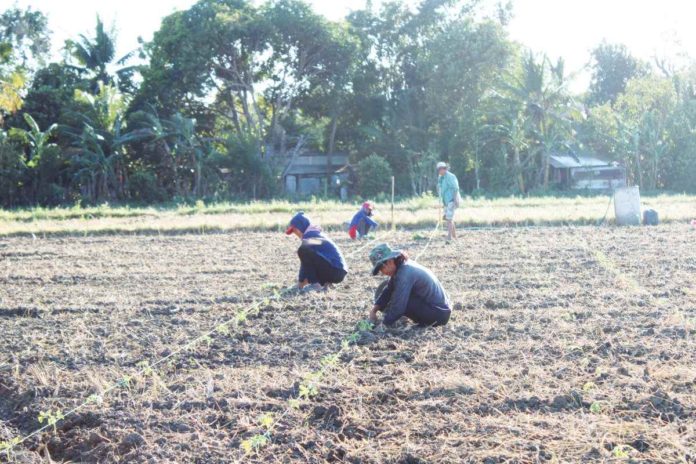
ILOILO City – The Regional Disaster Risk Reduction and Management Council (RDRRMC) is set to assess the impact of the El Niño phenomenon in Western Visayas.
The move aims to determine whether it is necessary to recommend declaring the region under a state of calamity, and to evaluate the preparedness of local government units (LGUs).
The RDRRMC will specifically consult with the Department of Agriculture (DA) to review the damage caused by El Niño to agriculture, fisheries, and livestock.
Cindy Ferrer, information officer and spokesperson for the Office of Civil Defense (OCD) Region 6, confirmed that the Western Visayas El Niño Task Group, led by the Department of the Interior and Local Government (DILG) Region 6 and OCD-6, along with other government agencies, will convene.
The group will discuss the effects of El Niño, possible measures, and assistance for the affected farmers, among other issues.
Ferrer revealed in an interview with Aksyon Radyo Iloilo that El Niño has already resulted in approximately P251,431,000 damages, particularly in the agricultural sector.
The majority of the damage has been to rice and corn crops, with Iloilo province, known as the rice granary of Western Visayas, being significantly affected.
The region has been experiencing severe heat and a lack of water for agriculture for the past six months.
According to Ferrer, the assessment of whether a state of calamity declaration is warranted depends on the affected population.
To date, around 6,675 farmers and fisherfolk have been impacted.
The RDRRMC-6 is responsible for monitoring the effects of El Niño and leading the task group created last year, which covers food security, water security, health security, and public safety.
The task group has formulated the Regional Comprehensive and Integrated Action Plan (CIAP) for El Niño, endorsed and approved by the council in December 2023.
The CIAP aims to help the public cope with the phenomenon and minimize its disastrous effects.
The OCD-6 has been reminding LGUs and other government agencies to submit their preparedness measures.
The formation of the task force follows forecasts by the Philippine Atmospheric, Geophysical and Astronomical Services Administration indicating that the region would be affected by El Niño.
Negros Occidental is currently experiencing drought, while other provinces face a dry spell.
Ferrer mentioned that for February, the provinces of Antique, Capiz, Guimaras, and Iloilo are in a dry spell, experiencing below-normal rainfall conditions for around three months. Negros Occidental, on the other hand, has been in a drought for five to six months.
Due to these challenging conditions, Ferrer urged LGUs and the public to conserve water and be mindful of health risks, such as heat stroke, due to the prolonged hot weather./PN