

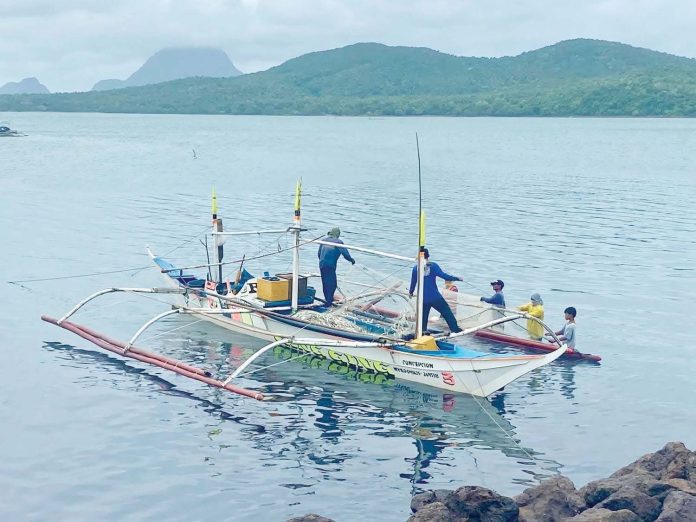
ILOILO City – It’s open season once again for fish species such as sardines, herrings, and mackerels in the Visayan Sea. The three-month fishing ban that started last November 2024 to allow these species to spawn ended on February 16.
The Bureau of Fisheries and Aquatic Resources (BFAR) urged stakeholders, particularly commercial and small-scale fishermen, to engage in responsible fishing practices to ensure sustainable fisheries and food security for Western Visayas.
“Comply with the regulations,” said BFAR regional director Remia Aparri in an interview with Panay News.
She emphasized that, as long as fishermen have the appropriate licenses or documentary permits, they are allowed to fish in the Visayan Sea but must adhere to the established fishing rules.
Aparri specifically highlighted the prohibition against using fine fishing gear or nets that trap juvenile fish.
“We must avoid destructive fishing practices, and fine nets must not be used because they capture even the smallest fish, preventing them from growing,” she explained.
Aparri also acknowledged the high level of compliance among stakeholders with BFAR’s regulations, noting that no commercial or small-scale fishermen were caught fishing during the three-month closed season.
“We observed good compliance, giving these species a chance to reproduce and grow,” she stated.
According to Aparri, the positive results of the closed season are evident, as larger fish are now being harvested by fishermen.
The fishing ban or closed season measure is part of BFAR’s low-cost, effective strategy to ensure the population of fish species increases, thereby securing the nutritional needs of the region for the current and future generations.
In addition to the closed season, BFAR implements other measures to support sustainable fisheries, including the management of marine protected areas. These efforts involve strict fisheries law enforcement, regulations against destructive fishing, protection of coral reefs and mangrove areas that serve as breeding grounds, and strengthening information campaigns to educate stakeholders about responsible fishing practices.
The closed season is mandated under Fisheries Administrative Order No. 167-3 (2013), which aims to conserve critical fish species by enforcing seasonal and spatial fishing bans in the Visayan Sea.
The Visayan Sea, known for its rich biodiversity, is a vital fishing ground, supplying a significant portion of the country’s sardines, mackerels, and other fish species.
The fish species protected under the annual closed season are as follows:
* Bali Sardine (Sardinella lemuru, locally known as tamban, tunsoy, or haul-haul)
* Short-bodied Mackerel (Rastrelliger brachysoma, known as hasa-hasa)
* Goldstripe Sardine (Sardinella gibbosa, known as halobaybay, tamban, lapad, tamban lison, or lapa)
* Indian Mackerel (Rastrelliger kanagurta, known as bulao or alumahan)
* Fimbriated Sardine (Sardinella fimbriata, known as tunsoy, lao-lao, tabagak, tamban, or liryan)
* Rainbow Sardine (Dussumieria acuta, known as tulis, balantiyong, or hilos-hilos)
The conservation efforts cover key areas in the Visayas, including Olotayan Island and Culasi Point in Capiz, Talisay River in Iloilo, Tomonton Point in Negros Occidental, Gigantes Island Lighthouse in Iloilo, and several locations in Cebu.
By maintaining these conservation practices, BFAR aims to ensure that the region’s fisheries remain viable and continue to support local communities and the country’s food security./PN