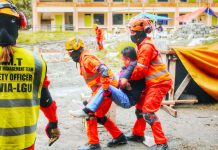




ILOILO City – With the onset of the rainy season, the Office of Civil Defense (OCD) has sounded the alarm, calling on all local government units (LGUs) in Western Visayas to immediately inspect, improve, and update their flood control systems — warning that inaction could lead to devastating consequences in low-lying and landslide-prone areas.
“The first line of preparedness is always with the LGUs,” said OCD-6 spokesperson Maria Cristina I. Mayor. “That’s why we always advise them to improve and update their flood control projects to lessen the impact of rains, especially in vulnerable areas.”
The OCD emphasized that LGUs must not only ensure flood infrastructures are functional, but also intensify early warning systems and community information drives to boost public readiness.
“They need to strengthen their information and early warning campaigns so residents can prepare early,” Mayor added, noting that community cooperation is vital. “We urge not only the LGUs but the entire community to be proactive. If a preemptive evacuation is ordered, everyone must be ready to leave for safer ground.”
OCD-6 has already instructed local Disaster Risk Reduction and Management Offices (LDRRMOs) to conduct an inventory of their search and rescue equipment in anticipation of emergencies.
If gaps are found, LGUs are advised to tap into available resources from the Philippine National Police (PNP), the Armed Forces of the Philippines (AFP), and even unaffected neighboring LGUs — a strategy already being applied in Negros Occidental.
The Department of Public Works and Highways (DPWH), meanwhile, can also provide clearing equipment when needed.
Mayor stressed that flood prevention isn’t just about infrastructure.
“We have coordinated with the DPWH to improve and maintain drainage systems, especially in flood-prone areas. But even the best drainage system will fail if residents keep clogging them with trash,” she warned. “We must also improve our garbage disposal habits.”
In anticipation of more rains brought by a low-pressure area and the southwest monsoon (habagat), OCD-6 released a public advisory on flood preparedness:
* Monitor weather updates and advisories
* Familiarize yourself with your community’s early warning and evacuation plan
* Join flood drills and preparedness actions
* Move valuables and essential items to upper floors
* Turn off main switches for electricity, water, and LPG before evacuating
* Secure livestock and pets in safe areas
* Evacuate immediately when instructed
According to the Philippine Atmospheric Geophysical and Astronomical Services Administration (PAGASA), between 11 to 19 tropical cyclones may hit the country between June and November, with the most active months being September and October.
As of early morning Saturday, June 6, a low-pressure area was tracked 115 km north of Virac, Catanduanes or 285 km east of Infanta, Quezon. Though not expected to develop into a storm within 24 hours, it is already bringing scattered rains and thunderstorms across Bicol, Central Visayas, and parts of Luzon and Eastern Visayas.
PAGASA also warned of possible flash floods and landslides due to moderate to heavy rainfall across various regions, including parts of Western Visayas.
“We are entering a period of heightened risk,” said Mayor. “Preparedness is not optional — it’s survival.”/PN