
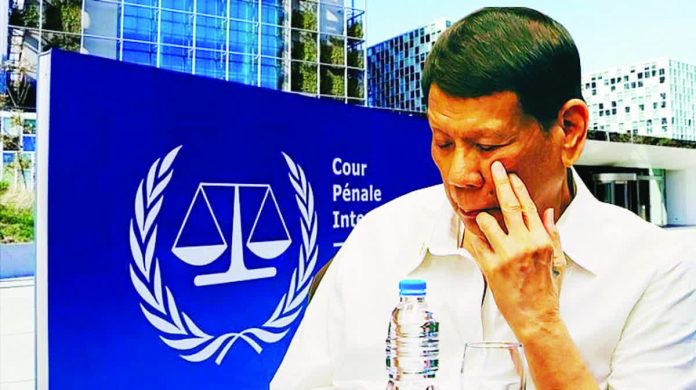
MANILA – The International Criminal Court (ICC) has ordered a comprehensive medical and psychological evaluation of former President Rodrigo Duterte to determine if he is mentally and physically fit to face trial for crimes against humanity stemming from his bloody anti-drug campaign.
The rare directive underscores the tribunal’s growing concern over the 80-year-old Duterte’s capacity to participate in legal proceedings after his defense claimed he could no longer remember people, places, or events relevant to the case.
In its ruling, the ICC Pre-Trial Chamber I appointed a three-member panel composed of a forensic psychiatrist, a neuropsychologist, and a geriatric and behavioral psychology expert to conduct the evaluation and submit their report to the court by October 31, 2025. Their names were redacted in the public version of the decision.
The Chamber stressed that the question of Duterte’s capacity to take part in pre-trial proceedings “is a question of law that falls exclusively within the remit of the Chamber’s legal determination.”
It added that the assessment “does not depend, in and of itself, on whether the suspect has particular medical conditions, but rather on whether he or she is able to effectively exercise his or her procedural rights.”
The experts were tasked to determine whether Duterte suffers from any condition affecting his ability to take part in ongoing proceedings—including the confirmation of charges hearing—and to recommend any special measures or adjustments that may be required.
The ICC also directed the prosecution, defense, and victims’ counsel to comment on the findings by November 5.
Duterte’s counsel, Nicholas Kaufman, earlier asked the ICC to indefinitely postpone hearings, citing his client’s alleged cognitive decline.
“In fact, he is not even able to process the reasons for his detention,” Kaufman said in his motion filed on September 11.
The former president, detained in The Hague, faces charges of murder and attempted murder linked to thousands of killings during his controversial “war on drugs” and his earlier tenure as Davao City mayor.
The ICC had already suspended Duterte’s confirmation of charges hearing, initially scheduled for September 23, after his lawyers argued he was “not fit to stand trial.” However, the court on September 26 rejected his bid for interim release, saying his continued detention “remain[s] necessary” under the Rome Statute due to the gravity of the allegations.
The case against Duterte continues to divide opinion in the Philippines, where human rights groups view the ICC process as long-overdue accountability, while his allies denounce it as foreign interference./PN