



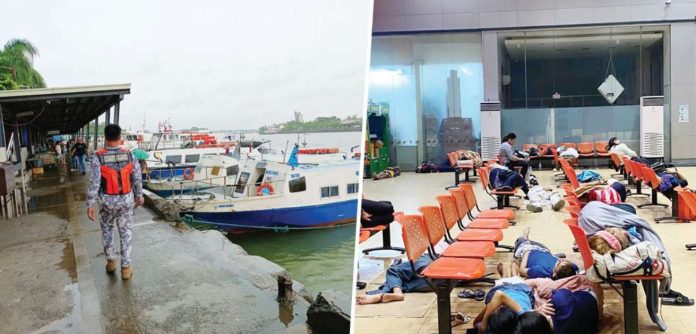
ILOILO City — Tropical Depression “Wilma” — which later weakened into a low-pressure area — triggered what authorities described as the most extensive maritime lockdown Western Visayas has seen in recent years. The Philippine Coast Guard (PCG) suspended vessel operations in 185 ports beginning Friday last week, a sweeping halt that disrupted the region’s supply chain as hundreds of cargo trucks and vessels were forced to stay put.
On Sunday morning, December 7, Wilma weakened into a low pressure area (LPA), according to the 11 a.m. bulletin of the Philippine Atmospheric, Geophysical and Astronomical Services Administration (PAGASA).
But despite the downgrade, PAGASA warned that hazardous weather conditions would persist due to the combined effects of the LPA and the shear line.
The Coast Guard District Western Visayas (CGDWV) beginning December 5 imposed the massive no-sail order as rough sea conditions made inter-island travel and cargo movement unsafe. The shutdown affected shipping routes that channel goods between Iloilo, Bacolod, Cebu, and Manila — key corridors for food, fuel, and commercial supplies.
Commander Richard Gura, head of PCG–Iloilo and CGDWV spokesperson, said the suspension formed part of the region’s most extensive maritime safety operation since the COVID-19 pandemic in 2020.
“We understand the inconvenience this brings… but safety always comes first,” he stressed. “When PAGASA issues a warning over an area, our responsibility is to suspend sea travel until it is safe to resume.”
Yesterday morning, Sunday, PAGASA said the LPA would continue moving generally westward or west-southwestward, traversing Southern Luzon and the Visayas through Monday. Once it enters the West Philippine Sea, redevelopment into a tropical depression remains possible.
Hundreds of cargoes immobilized
Between noon and 4 p.m. on December 6, the Coast Guard recorded:
* 308 rolling cargoes stuck in ports
* 10 vessels unable to sail
* 4 vessels forced to take shelter
* 1,100 passengers, drivers, and cargo helpers stranded
These included trucks carrying perishable goods, delivery vehicles headed for provincial hubs, and cargo vessels bound for Cebu and Luzon.
Gura said delays were unavoidable but essential for safety.
“Swells can be high, winds unpredictable, and visibility poor,” he explained. “We base restrictions not just on local weather but on PAGASA’s overall analysis and our monitoring of sea state.”
Major economic routes paralyzed
The suspension covered high-volume commercial routes such as:
* Iloilo City → Cebu City
* Iloilo City → Manila
* Dumangas → Bacolod
* Iloilo Fastcraft Terminal → Bacolod
* Bay-ang (Ajuy) → Manta-angan (E.B. Magalona)
* All vessel trips across northern Iloilo municipalities
These corridors handle the flow of consumer goods, fish, livestock, construction materials, and agricultural products — making Wilma’s impact felt not only at ports but also potentially in store shelves and local markets in the days ahead.
Meanwhile, operations in the Iloilo–Guimaras crossing continued as the area was not under a gale warning.
“Operations continue, but we maintain strict monitoring,” Gura said.
Warning to fisherfolk
As part of the region-wide maritime safety operations, the Coast Guard issued strong advisories to coastal communities.
“Please do not risk your lives,” Gura appealed. “Even small outriggers can easily capsize in rough seas. No catch is worth endangering yourself or your families.”
Lifting of ban depends on sea conditions
Gura assured that PCG teams across the region remain fully deployed to assist ports, secure cargoes, and manage congestion.
“Once sea and weather conditions improve, we will allow voyages to continue. But until then, we ask for patience and cooperation,” he said.
“Our priority is to ensure that no life is lost at sea during this weather disturbance.”/PN