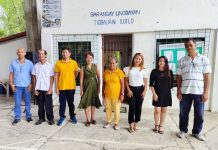



RECENTLY, the first thing I noticed when I walked into ISUFST was not the usual chatter of teachers and staff rushing to their 8 a.m. reporting for duty, but the bright wash of orange across the hallways.
Some wore shirts, others had orange overalls. It wasn’t just orange clothes. It was a reminder of a global plea to stop violence against women (VAW) — a plea that feels personal when most of the love, discipline, and wisdom in your life came from women.
I work with women daily, and I go home to a mom and a daughter who carry their strength lightly. When women are hurt, the whole society staggers.
The data tells the story. Across the globe, one in three women has suffered violence. In the Philippines, 17.5 percent of women aged 15 to 49 have been harmed by someone they loved.
These are not numbers — they’re wounds. Those digits land differently when you think of the women you know: your former student who hesitated before saying she needed a recommendation letter because she was moving away from a controlling partner; the staff member who joked too lightly about “pasaway ako, Sir, kaya gin-amo ako sini niya” (I was “stubborn,” Sir, so he hurt me), hoping humor could dilute her fear; the teenage girl who went to the VAW desk alone because her family believed she should “just understand” her uncle’s temper, or, worse, sexual proclivities.
According to Claudio (2019), violence is not only widespread but normalized, embedded in traditions that praise male dominance and assign women to the quiet corners of patience and self-sacrifice. These traditions are not abstract ideas. They show up in classrooms when boys are excused for “being boys,” in barangays where gossip turns victims into culprits, and in families where daughters learn early that speaking up invites punishment.
The silence surrounding violence is often louder than the violence itself.
I remember a student years ago who showed up to class with a bruise she tried to hide under her bangs. She laughed when her classmates asked what happened, saying she tripped over a dog, even though she did not own one. Students and teachers often know when someone is not telling the real story, but our cultural instinct to stay out of “away mag-asawa” keeps many of us quiet.
The Philippine Statistics Authority (PSA) notes that only two in five abused women seek help. Shame, fear, and distrust in institutions form the perfect storm for silence. Sabrina Gacad of Lunas Collective (2023) describes it as the “pause your bias” moment — when each of us, whether friend, teacher, colleague, or counselor, must step back from our assumptions and notice the distress in front of us before we say anything that could either help or harm.
In many cases, survivor narratives do not fit the dramatic images people expect. A woman may speak calmly while her world is falling apart. She may still smile because she has learned to survive by masking. The role of a caring community, Gacad argues, is not to interrogate pain but to expand the survivor’s power by offering empathy, presence, and believable support. (To be continued)/PN