
ILOILO — In the days leading up to Christmas, when public markets swell with the clatter of coins, the scent of fresh produce, and the quiet anxiety of families counting what little they have left, a single figure landed with a thud: P500.
That was the amount the Department of Trade and Industry (DTI) suggested could cover a modest Noche Buena — the Filipino Christmas Eve feast that symbolizes abundance, gratitude, and togetherness. Instead of comfort, the estimate sparked disbelief, anger, and a deeper conversation about how far removed policy pronouncements can be from life on the ground.
For many Ilonggos, the suggestion was not merely unrealistic. It felt personal.
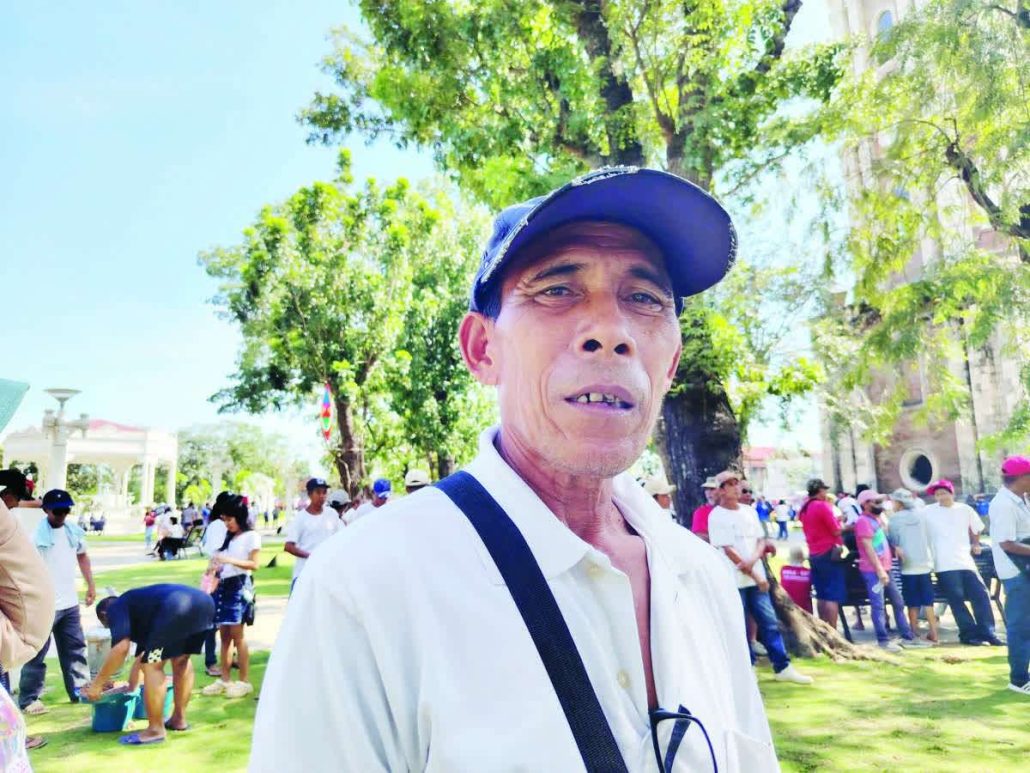
“Sa pang-Noche Buena, tama ka kulang (ang P500) eh. Ibakal mo pa nga daan ka karne, panakot mo pa sa spaghetti, kag kon mag bakal ka pa abi ka uring (uling) no. Mayo lang kon isa ka eh.”
The words came from Edgardo Zona, 62, a farmer from Sta. Barbara town, who spoke with the weary precision of someone who has priced every ingredient, every kilo of meat, every necessary expense. His point was simple: before you even begin to cook, the money is gone.
In the same town, Dyosas Sumalakay, 65, a housewife, laughed at the arithmetic implied by the P500 claim — not out of humor, but exhaustion.
“Kon rako-rako imo nga bata, kulang-kulang, indi ka igo. Hambal da maka-igo gid kag depende sa imo deskarte. (But) mga P2,000 na ang magastos or sobra,” she said.
Sumalakay’s estimate — P2,000 or more — reflects the reality of households with children, extended family, and expectations shaped by tradition. Christmas, after all, is not eaten alone.
Across Iloilo’s farming towns and coastal communities, the math does not improve.
In Janiuay town, 69-year-old farm owner Felipe Borcillo tried to make sense of the suggestion, if only hypothetically.
“Ti, kon subong budget-ton mo, pwede man na guro, pero ano kaunon kag baklon mo? Baboy pa lang nga daan mahal na. Ang panakot sang imo pancit, pila ang bili? Indi gid ya kaigo ang P500 sa kataason pa lang sang mga baligya subong nga panahon. Pareho subong, may overpricing pa. Kulangon gid,” said Borcillo.
The rising cost of pork, vegetables, cooking fuel, and even basic seasonings turns the P500 idea into a theoretical exercise, not a household plan.
From the fishing town of Ajuy, Telma Santoyo, 73, a fish vendor who knows market prices by heart, was even more direct.

“Indi gid na ya pwede mag igo. Hamakon mo mag-spaghetti ka, damo ka sahog, mga panakot mo nga mabakal ya mahal naman. P500? Kon parehas sang una, pwede pa guro,” she stressed, drawing a clear line between the past and today’s inflation-driven present.
And in Dumangas, Emac Duco, 69, stripped the argument to its essentials.
“Kulang gid eh. Bisan duha kamo sa sulod ka balay, indi man na kaigo sa salad, ham, spaghetti nga hambal sang DTI,” he said.
What these voices reveal is not simply frustration over holiday spending, but a wider unease about the cost of living in an economy where prices climb faster than incomes. Christmas only magnifies the pressure — when families feel compelled to uphold tradition, even as their purchasing power shrinks.
The backlash reached the national political conversation when former Kabataan party-list representative Raoul Danniel Abellar Manuel of Iloilo City weighed in, calling the DTI’s stance tone-deaf.
“It’s very insensitive and disconnected from reality. I recall a former DTI Secretary saying that the minimum wage is enough. The P500 for Noche Buena only highlights that the Marcos Administration is oblivious to the long-standing demands of Filipinos for price control on essential goods,” Manuel emphasized.
His criticism underscored what many Ilonggos already feel: that discussions about affordability cannot be reduced to spreadsheets and press statements. They must begin in the market stalls, the kitchens, and the homes where every peso is stretched thin.
As Christmas draws closer, families across Iloilo are adjusting — paring down menus, replacing meats with cheaper alternatives, or quietly abandoning the idea of a “complete” Noche Buena altogether. Tradition survives, but often in diminished form.
The controversy leaves a lingering question: if a P500 Christmas feast is being held up as achievable, whose reality is it based on? And more importantly, who is being asked to believe it?
For Ilonggos counting coins at the market, the problem is not their budgeting skills. It is the widening gap between policy rhetoric and the price tags hanging from everyday life./PN
Zona caption
“Sa pang-Noche Buena, tama ka kulang (ang P500) eh. Ibakal mo pa nga daan ka karne, panakot mo pa sa spaghetti, kag kon mag bakal ka pa abi ka uring (uling) no. Mayo lang kon isa ka eh,” says Edgardo Zona from Sta. Barbara, Iloilo.
Santoyo caption
“Indi gid na ya pwede mag igo. Hamakon mo mag-spaghetti ka, damo ka sahog, mga panakot mo nga mabakal ya mahal naman. P500? Kon parehas sang una, pwede pa guro,” says fish vendor Telma Santoyo.