

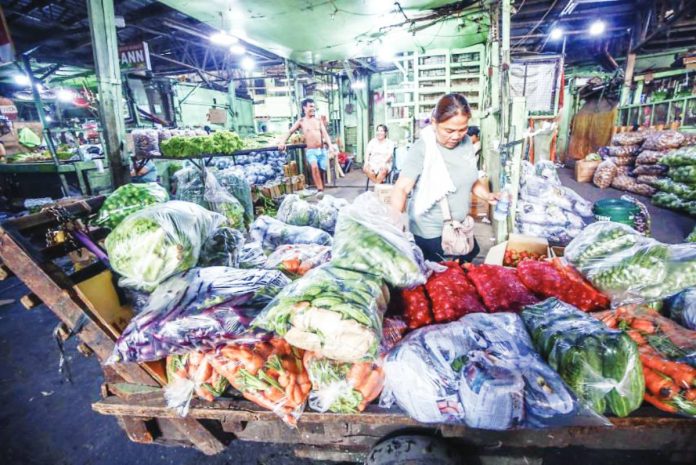
MANILA — Businesses delaying price increases despite volatile global oil prices are helping the government blunt the economic impact of the Middle East crisis, as authorities simultaneously roll out fuel supply measures and expanded subsidies to shield consumers.
Executive Secretary Ralph Recto commended companies that chose to defer price adjustments, saying their actions reinforce government efforts to stabilize prices and protect households already grappling with rising costs.
“As we do these, we commend businesses that have deferred price increases as an act of solidarity with the public, commendably placing patriotism before profits,” Recto said.
The government has been scrambling to contain the ripple effects of surging global oil prices, with President Ferdinand Marcos Jr. ordering a multi-pronged response focused on supply security and price mitigation.
Recto said the private sector’s restraint complements ongoing measures, including securing oil from both traditional and alternative sources and coordinating with industry players to maintain steady fuel distribution. Major firms such as Petron and Seaoil have committed to ensuring stable supply lines.
The Department of Energy (DOE), in coordination with other agencies, has also arranged the procurement of 1.04 million barrels of diesel, with initial deliveries expected within the week.
To cushion the most affected sectors, the government is expanding fuel subsidies for public transport operators while extending assistance to farmers and fisherfolk to prevent a surge in food prices.
Energy conservation measures are likewise being enforced across government offices, including limits on non-essential fuel use and tighter monitoring of electricity consumption.
Recto added that austerity steps have also been applied to major state events, including a scaled-down hosting of the Association of Southeast Asian Nations (ASEAN) Summit to redirect resources to urgent needs.
Local government units have also introduced stopgap interventions such as free rides and transport assistance for commuters.
“These are examples of damayan that will help us ride out together the economic disruptions … hitting us hard,” Recto said./PN