


Five of the country’s leading business groups said they support government efforts to secure alternative supplies of fuel, among other measures they had recommended, amid the persistent rise in fuel costs due to the Iran war now past its first month.
In a joint statement on Monday, March 30, the Philippine Chamber of Commerce and Industry, Management Association of the Philippines, Federation of Philippine Industries, Federation of Filipino-Chinese Chambers of Commerce and Industry, and Makati Business Club all acknowledged that volatile fuel prices have become “serious threats” to economic stability and consumer welfare.
They said they discussed “collaborative” measures intended to “safeguard Filipino consumers and the Philippine economy” during a March 27 meeting called by Finance Secretary Frederick Go.
One such recommendation is the pursuit of government-to-government procurement deals with nontraditional partners such as Russia, India and neighboring Indonesia.
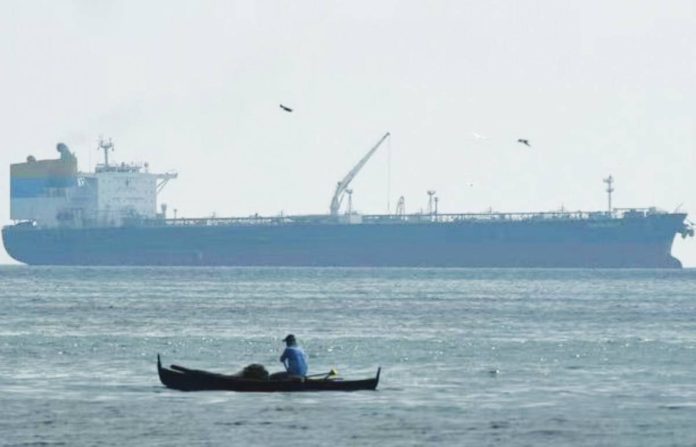
Last week, the Philippines received its first shipment in five years of Russian crude amounting to 2.48 million barrels, as confirmed by Petron Corp., the country’s sole refiner.
Meanwhile, the Bureau of Internal Revenue (BIR) also on Monday issued a special permit for the emergency importation of petroleum products by PNOC-Exploration Corp. (PNOC-EC).
The business groups also called for targeted subsidies for vulnerable sectors, particularly public transport operators who have sought fare increases to cushion the impact of rising fuel costs.
The business leaders also said maintaining stable interest rates and managing nonfuel costs across supply chains would also be critical, to limit price pressures on basic goods.
They committed to cutting energy consumption and accelerating investments in renewable energy.
They agreed to adopting flexible work arrangements to reduce fuel demand, implementing “aggressive energy-saving measures” across corporate and industrial facilities, and promoting energy conservation practices among employees.
Mall operators such as SM Supermalls, Robinsons Malls and Ayala Malls announced last week they would shorten operating hours in response to the government’s declaration of a national energy emergency.
The businessmen also pledged to “invest in and accelerate the adoption of alternative energy solutions, particularly solar power” to reduce reliance on imported fuel and strengthen long-term energy security. (Logan Kal-El M. Zapanta, Nyah Genelle C. De Leon © Philippine Daily Inquirer)