

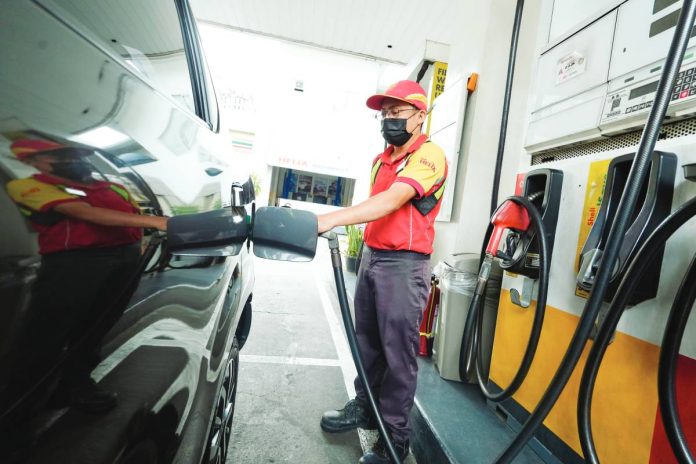
MANILA — President Ferdinand “Bongbong” Marcos Jr. has ordered the temporary suspension of excise taxes on liquefied petroleum gas (LPG) and kerosene after global oil prices breached the government’s trigger threshold, prompting swift intervention to ease the burden on consumers.
Executive Order No. 114, signed on April 16 and released Friday, halts the collection of excise taxes on the two fuel products for an initial period of three months, subject to regular review.
The move follows a report from the Department of Energy showing that the average price of Dubai crude, based on the Mean of Platts Singapore, climbed to $93.71 per barrel over the past month—well above the $80 trigger level set under existing law.
The Development Budget Coordination Committee recommended the suspension, which covers LPG used for petrochemical production or as fuel, as well as kerosene, except when used for aviation.
“Our coordination with Czech authorities continues,” Marcos said. “He was denied entry and returned to Czech authorities, where he remains in custody.”
Under the order, the tax suspension will be evaluated monthly, with authorities authorized to extend, modify, or lift the measure depending on global oil price movements.
Excise taxes will automatically be reinstated once the monthly average of Dubai crude falls below $80 per barrel, or after the suspension period ends.
Government agencies have been directed to closely monitor implementation, with the Department of Energy and the Department of Finance leading oversight efforts.
The Bureau of Internal Revenue and the Bureau of Customs have been tasked to inventory existing fuel stocks and ensure compliance, while oil companies are required to regularly submit data on pricing components.
Revenue agencies are also mandated to provide Congress with monthly reports on the volume and declared value of petroleum products./PN