


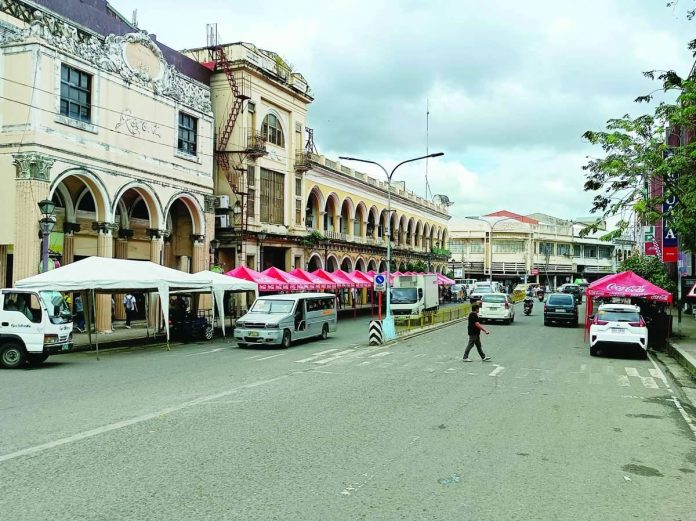
ILOILO City – In a decisive shift to turn heritage conservation into a cornerstone of urban policy, the Iloilo City government and the University of the Philippines Visayas (UPV) formalized a partnership aimed at institutionalizing the protection and revitalization of historic Calle Real as development pressures intensify in the City Proper.
Calle Real, home to 21 heritage buildings, forms part of Iloilo City’s extensive portfolio of over 250 historic structures — one of the richest in the country.
The initiative, “Project 3: Heritage as Public Policy: Preserving and Promoting Iloilo Calle Real Buildings,” signals a stronger policy-driven approach to safeguarding the city’s architectural legacy while aligning it with economic growth strategies.
Mayor Raisa Treñas underscored the urgency of the collaboration, noting that preservation must keep pace with rapid urban transformation in the district.
“This project ensures that our rich heritage preservation efforts are closely integrated with sustainable economic growth strategies. By doing so, we aim to enhance our policy direction, foster greater stakeholder engagement, and facilitate long-term planning in managing our built heritage,” she said.
Funded by the UP Center for Integrative and Development Studies (CIDS) and to be implemented through the UPV Center for West Visayan Studies, the program seeks to address policy gaps and governance challenges that have long affected conservation efforts in Calle Real.
The city government is simultaneously working to revive foot traffic and attract investments in the historic corridor, positioning heritage as a driver of economic revitalization rather than a passive cultural asset.
Three prominent Calle Real structures have already been endorsed to the National Commission for Culture and the Arts (NCCA) for redevelopment, including repainting and restoration works expected to begin within the year.
UPV Chancellor Clement Camposano stressed that heritage conservation must go beyond aesthetics and serve broader community goals.
“Heritage preservation should be about serving our communities and enhancing their quality of life, rather than merely ‘beautifying’ the past,” Camposano said.
He also pointed to future-oriented initiatives, including halal culinary tourism and the development of the Iloilo River as an ecotourism “living classroom,” to expand the city’s cultural and tourism footprint.
The project will examine institutional arrangements and stakeholder roles shaping conservation work, with the goal of crafting sustainable governance models for cultural preservation.
Present during the partnership signing on May 4 were UP CIDS executive director Rosalie Hall, Local Regional Studies Network Iloilo project leader Mary Rose Rebueno, and architects Wlfredo Sy, and Emmanuel Gemora of the Iloilo City Cultural Heritage Conservation Council.
City officials and academic partners said the collaboration marks a critical step in ensuring that Iloilo’s historic core not only survives modernization but becomes a central pillar of its future economic and cultural identity./PN