


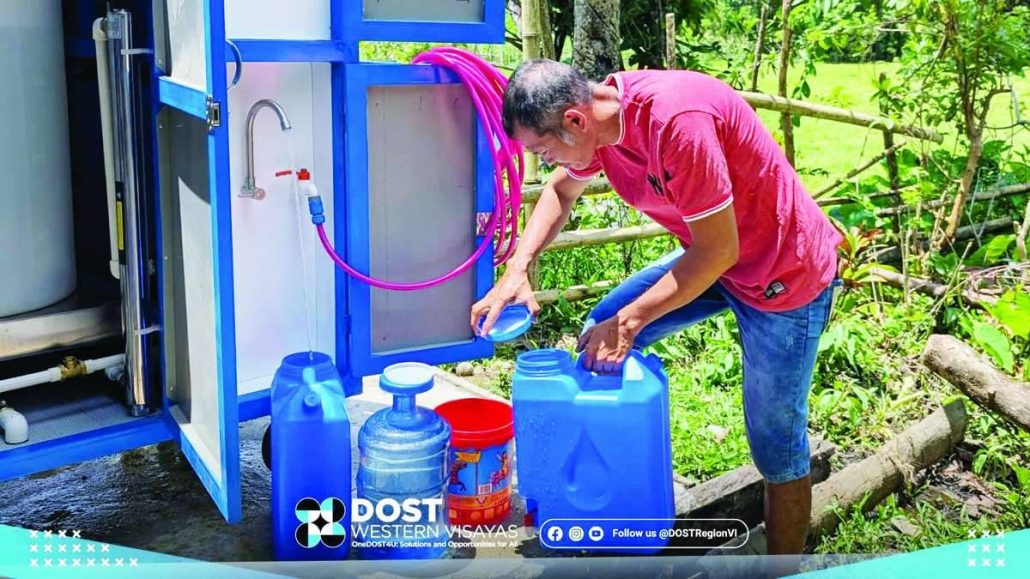
AKLAN – More than 50 households in the Akeanon-Bukidnon indigenous community in Barangay Medina, Madalag, Aklan are now enjoying access to clean and safe drinking water through a solar-powered water treatment system deployed by the Department of Science and Technology (DOST).
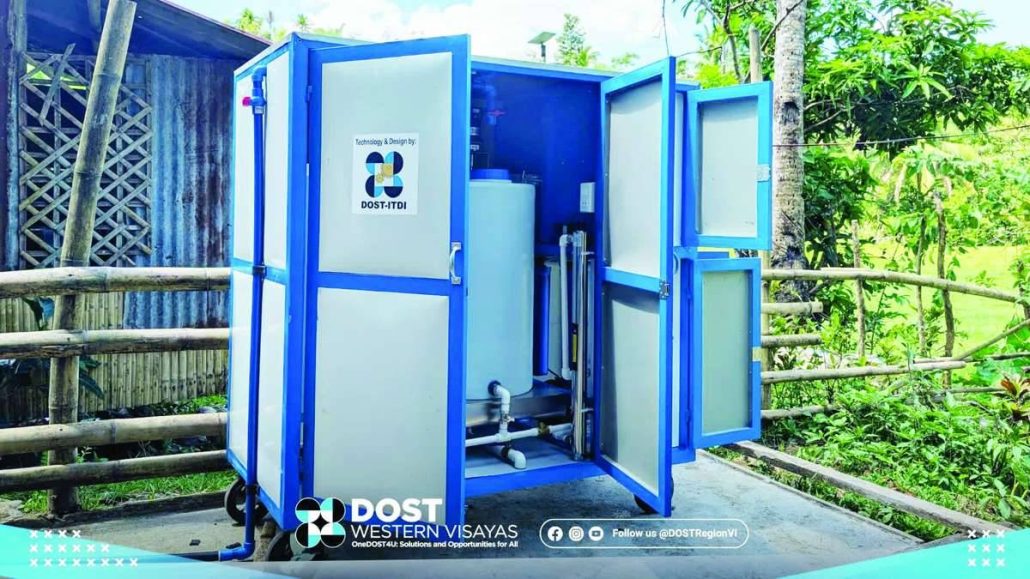
The project introduced the Solar-Powered and Mobile Treatment System for Freshwater (SAFEWTRS), an innovative technology developed by the DOST-Industrial Technology Development Institute (DOST-ITDI) to address water scarcity and sanitation concerns in underserved communities.
SAFEWTRS is a compact and mobile water treatment facility that uses solar energy to convert freshwater from local sources such as rivers, lakes, and rainwater into potable drinking water. The technology promotes environmental sustainability by harnessing renewable energy while providing communities with a reliable source of safe water.
The deployment forms part of the project dubbed “Empowering Akeanon-Bukidnon Communities through Science and Technology (EAST) Initiatives,” implemented by DOST in partnership with Aklan State University.
The initiative seeks to improve the quality of life of indigenous peoples in selected barangays of Madalag through the application of science, technology, and innovation.
Barangay Medina was identified as one of Aklan’s unserved and underserved areas by 2025 and has long depended on spring water for drinking, exposing residents to potential health and sanitation risks. The installation of SAFEWTRS is expected to significantly improve water quality and public health conditions in the community.
To ensure the system’s sustainability, DOST-ITDI conducted a two-day training program for local residents, equipping them with the knowledge and skills needed to operate, maintain, and troubleshoot the equipment.
The hands-on training strengthened community participation and ownership of the project while promoting self-reliance in managing the technology.
DOST said the initiative demonstrates how appropriate and sustainable technologies can improve daily living conditions, empower local communities, and enhance resilience in geographically isolated and disadvantaged areas.
The agency likewise reaffirmed its commitment to advancing inclusive development through science, technology, and innovation, emphasizing that programs such as SAFEWTRS provide practical solutions that generate long-term economic and social benefits for Filipinos.
DOST continues to explore opportunities to expand similar projects in other underserved communities nationwide as part of its efforts to promote innovation, sustainability, and improved quality of life./PN