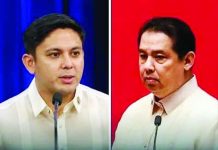



MANILA — The Office of the Ombudsman has dismissed criminal and administrative complaints against Executive Secretary Ralph Recto and former Philippine Health Insurance Corp. (PhilHealth) president and chief executive officer Emmanuel Rufino Ledesma Jr., ruling that there was insufficient evidence to hold them liable over the controversial transfer of P60 billion in PhilHealth reserve funds to the National Treasury.
In a resolution dated June 2, the anti-graft body cleared Recto and Ledesma of allegations of plunder, technical malversation, graft, and grave misconduct, saying the evidence presented failed to establish a reasonable likelihood of conviction or administrative liability in connection with the fund transfer implemented during Recto’s tenure as finance secretary.
The complaints stemmed from the implementation of Department of Finance Circular No. 003-2024, which ordered the remittance of excess PhilHealth reserve funds to help finance unprogrammed appropriations under the 2024 General Appropriations Act.
PhilHealth remitted a total of P60 billion to the National Treasury in three tranches before the Supreme Court issued a temporary restraining order and eventually declared the transfer invalid in December 2025.
Despite the high court’s ruling, the Ombudsman found no proof that Recto or the other respondents personally benefited from the transfer.
“On the contrary, DOF Secretary Recto was commended…for his commitment to return the P60 billion to PhilHealth. Thus, the return of the P60 billion to PhilHealth militates against the allegation that respondents took advantage of their positions for ‘personal enrichment,'” the resolution read.
The Ombudsman also ruled that there was no showing of bad faith, manifest partiality, or corrupt intent on the part of Recto in carrying out the transfer.
In his defense, Recto argued that he merely implemented provisions of the 2024 national budget law, which carried a presumption of validity at the time.
He also disputed claims that the transfer jeopardized the country’s healthcare system, saying complainants failed to substantiate how such injury occurred.
“As to the claim that the transfer of the PhilHealth Reserve Funds to the National Treasury caused undue injury to the Filipino people by risking the health care program of the Philippines, RECTO contends that complainants did not elaborate how the supposed risk arose as the alleged ‘risk’ to the health care program of the Philippines is not the undue injury that would give rise to violation of Section 3(2) of RA 3019,” the resolution stated.
Recto further cited legal opinions issued by the Office of the Government Corporate Counsel, the Governance Commission for Government-Owned and Controlled Corporations, and the Commission on Audit, which he said supported the legality of the transfer when it was carried out.
He likewise maintained that the mere movement of public funds does not constitute plunder and stressed that there was no evidence showing that any portion of the P60 billion was diverted for personal gain.
However, one of the complainants, lawyer Rodel Taton, expressed disappointment over the Ombudsman’s ruling, insisting that government officials acted with “evident bad faith” in authorizing the transfer.
“It is a sad day for accountability and responsibility in the utilization of public funds, particularly the PhilHealth funds,” Taton said in a statement.
The Ombudsman’s dismissal effectively ends, at least for now, efforts to hold Recto and Ledesma administratively and criminally liable over the disputed transfer, which had sparked nationwide debate over the use of PhilHealth funds and eventually prompted intervention by the Supreme Court./PN