


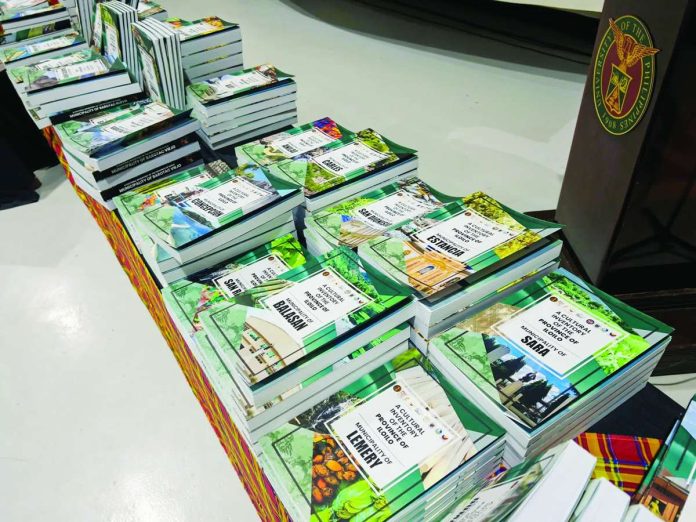
ILOILO City — A massive effort to safeguard the cultural identity and historical legacy of Western Visayas reached a major milestone with the launch of 100 volumes of cultural mapping inventories documenting the heritage treasures of Panay Island, the island-province of Guimaras, and Negros Occidental, providing one of the most comprehensive cultural archives ever assembled in the region.
The University of the Philippines Visayas (UPV), in partnership with the National Commission for Culture and the Arts (NCCA), the office of Sen. Loren Legarda, state universities and colleges (SUCs), and provincial and local government units, formally unveiled the volumes on June 19 at the UPV Auditorium.
The project documents a wide range of cultural heritage assets across the region, including built and movable heritage, natural resources, intangible cultural traditions, notable personalities, and cultural institutions identified by local communities as significant to their history and identity.
The 100-volume collection builds on the 32 volumes covering Negros Occidental that were launched earlier this year and serves as a vital reference for cultural preservation, policy-making, education, tourism development, and research.
The unveiling ceremony was attended by leaders of participating SUCs, including Dr. Gabriel M. Salistre Jr. of Iloilo Science and Technology University, Dr. Lilian Diana Parreño of Guimaras State University, Dr. Godelyn G. Hisole of the University of Antique, and Vice President Dr. Leo Andrew B. Biclar of Capiz State University.
The cultural mapping initiative, spearheaded by UPV through its Office of the Vice Chancellor for Research and Extension, supports the implementation of the Cultural Mapping Law authored by Senator Legarda.
In separate keynote messages, Legarda and UPV Chancellor Dr. Clement C. Camposano emphasized the importance of preserving cultural heritage and maintaining a comprehensive inventory that can guide local governance, strengthen heritage-based tourism, and reinforce regional identity for future generations.
The ceremony also honored researchers, cultural mappers, local government partners, and academic institutions that spent months conducting field documentation and community validation activities across the region.
To make the cultural mapping data more accessible to the public, the project also launched a dedicated cultural mapping website, video documentaries, and a photo exhibit showcasing heritage sites and cultural assets documented during fieldwork.
Project organizers said the resulting publications, multimedia materials, and online resources will provide communities, educators, researchers, and local governments with valuable tools for cultural education, scholarship programs, heritage conservation initiatives, and community-based cultural policies.
The cultural mapping project involved state universities, provincial governments, tourism and cultural affairs offices, researchers, and cultural workers from across Western Visayas, reflecting a broad regional commitment to preserving the identity, memory, and heritage of local communities.
Organizers described the initiative as more than an academic undertaking, calling it a long-term investment in protecting the cultural treasures of Western Visayas and ensuring they are preserved and celebrated for generations to come./PN