

ILOILO – The Iloilo Provincial Government has shifted to “disaster mode” and is preparing tighter biosecurity measures after the red-striped soft scale insect (RSSI) infested more than 7,000 hectares of sugarcane plantations. Gov. Arthur Defensor Jr. described the situation as “alarming.”
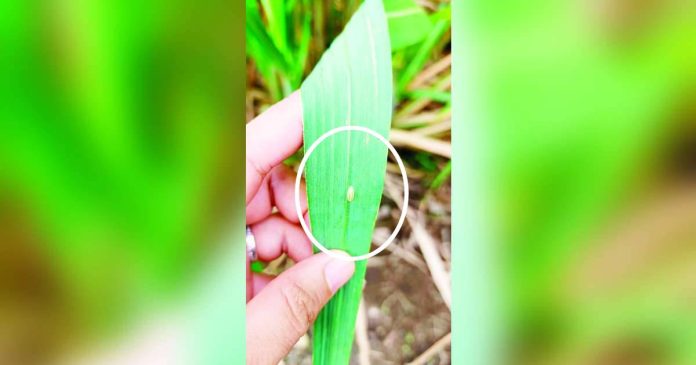
RSSI is a plant pest that attacks sugarcane by feeding on plant sap. Heavy infestation can weaken the crop and threaten sugarcane productivity, making early detection, containment and coordinated pest-control measures crucial. The adjacent province of Capiz on Monday declared a state of calamity, citing the severe damage of RSSI to its sugarcane plantations.
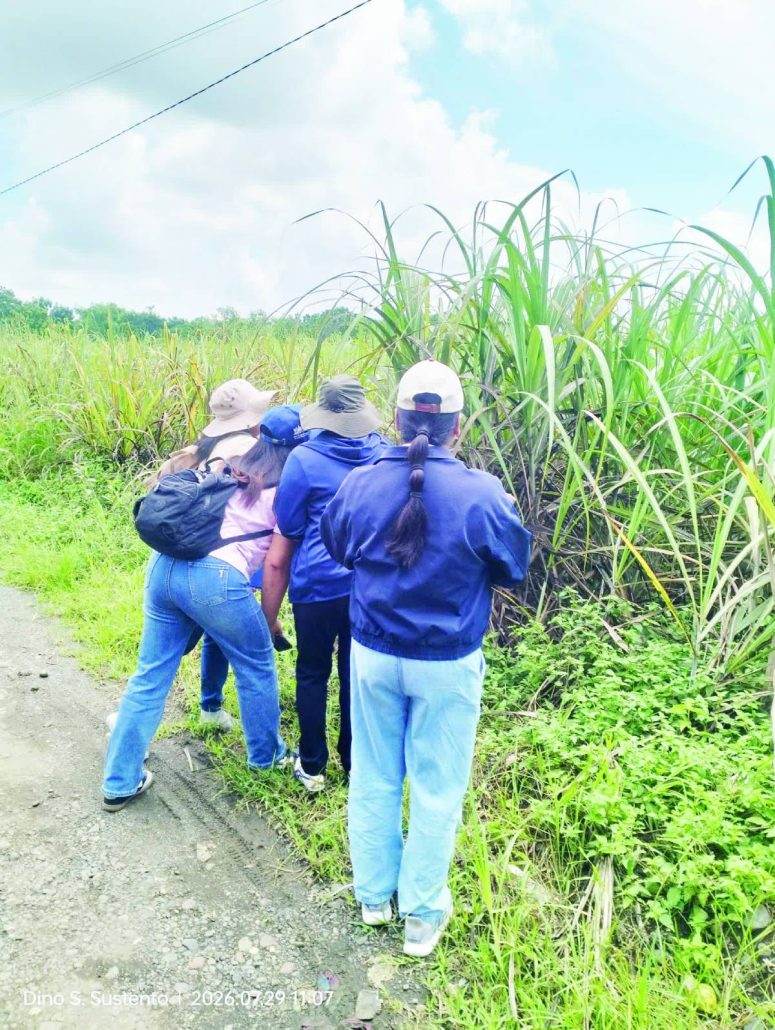
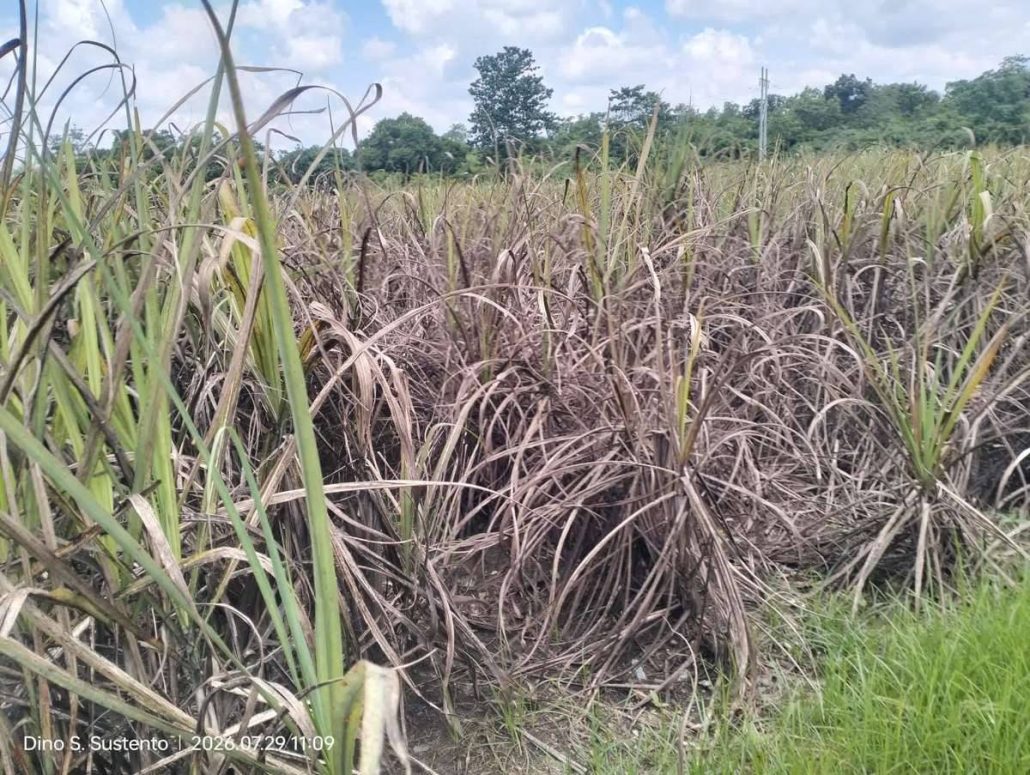
The Iloilo Provincial Agriculture Office (PAO) data showed that 7,021 hectares, or nearly 34 percent of Iloilo’s 20,749.88 hectares of sugarcane plantations, have already been affected by RSSI, underscoring the scale of the threat to one of the province’s major agricultural industries.
While the infestation has not yet reached the threshold for declaring a state of calamity, Defensor said the provincial government has adopted a disaster-response approach to accelerate interventions and prevent the pest from spreading to unaffected plantations.
“It is alarming, amo na gani nag-disaster mode kita. Ang hulag naton ginaplastar sang maayo kay daw ASF (African Swine Fever) ‘ni sia eh. Indi sia madula kag dapat mapag-on ang imo prorgama,” Defensor told reporters Wednesday morning, Aug. 12.
The provincial government is moving to establish containment zones and regulate the movement of sugarcane planting materials from infested areas, similar to biosecurity measures used against African swine fever.
Defensor said he was set to issue an executive order implementing protocols and biosecurity measures crafted by the PAO.
“We will regulate the movement. May zoning na kita eh. We already have a map. So, mang-kordon kita,” Defensor said.
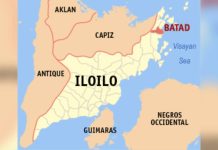
PAO figures showed Batad has the highest percentage of affected sugarcane land, with 75 hectares out of its 109.80 hectares planted to sugarcane infested, equivalent to 68 percent.
It was followed by Carles, where 130 of 223 hectares, or 58 percent, were affected; Banate, with 490 of 865 hectares, or 57 percent; Dingle, with 280 of 502 hectares, or 56 percent; and Anilao, with 930 of 1,858 hectares, or 50 percent.
In terms of actual area affected, however, Passi City recorded the largest infestation at 2,275 hectares, followed by San Enrique with 1,100 hectares and Anilao with 930 hectares.
Other affected areas are Lambunao, one hectare; Pototan, 55 hectares; San Dionisio, 25 hectares; San Rafael, 80 hectares; Sara, 42 hectares; Balasan, 65 hectares; Bingawan, 25 hectares; Estancia, 70 hectares; Badiangan, 10 hectares; Barotac Nuevo, 375 hectares; Barotac Viejo, 215 hectares; Calinog, 175 hectares; Concepcion, 28 hectares; Dueñas, 320 hectares; Dumangas, 10 hectares; and Janiuay, 228 hectares.
Defensor will convene the Provincial Defense Cluster on Aug. 17, together with the mayors of Iloilo’s 43 local government units and stakeholders such as the Sugar Regulatory Administration (SRA) to discuss measures against the infestation.
Recommended measures include intensified monitoring and early detection, integrated pest management, farmer training and community awareness, strategic chemical control under strict safety protocols, and assistance programs for affected farmers.
The proposed assistance could include financial aid, input subsidies and rehabilitation support for heavily infested plantations.
Defensor is also studying whether the provincial government can provide financial assistance to affected sugarcane farmers because funding for RSSI-related assistance was not included in the province’s approved 2026 budget.
The province and SRA have already undertaken systematic data collection and validation to improve infestation mapping and response tracking.
Existing interventions also include drone-assisted application of biological control agents and foliar fertilizers, field monitoring and surveillance, regular infestation reporting, chemical and biological control, and farmer education on safe and effective pest management.
The provincial government is also looking at purchasing battery-operated sprayers and personal protective equipment, providing logistical support to SRA personnel and establishing an SRA biological control laboratory in Panay./PN