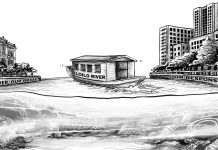



WHEN the lights go out, consumers are told the Visayas grid is on yellow alert. Sometimes it is red. Then comes Manual Load Dropping, followed by rotational brownouts.
But for the ordinary Ilonggo sitting in a darkened home, the business owner watching operations grind to a halt, or the hospital forced to depend on backup power, one basic question remains frustratingly unanswered: Who is accountable?
That question must be at the center of the discussion on the continuing power interruptions in Iloilo City. Mayor Raisa Treñas is correct in saying: “We are ready to work with everyone concerned, but we need solutions and urgency. This should not become a normal part of the daily lives of our Ilonggos and businesses.”
Solutions, however, begin with accountability.
The electricity system involves different players with different responsibilities — power generators that produce electricity, the National Grid Corporation of the Philippines that operates the transmission network, distribution utilities that deliver electricity to consumers, and government regulators and agencies tasked with overseeing the industry. Yet when the lights go out, these distinctions mean little to consumers. They simply know that electricity disappeared and somebody, somewhere, failed to supply enough of it.
That confusion cannot continue. Technical terms may describe conditions in the power system, but they must never become convenient shields behind which accountability disappears.
When available supply cannot meet demand, consumers deserve to know why. Was there insufficient generation? Did power plants unexpectedly go offline? Were reserves inadequate? Were there transmission constraints? How much capacity was unavailable, and for how long? More importantly, which institution is responsible for addressing each problem?
Every major player should clearly explain its responsibility. If the problem originates from generation, identify it. If it concerns transmission, explain it. If there are distribution issues, disclose them. If regulatory intervention is needed, the responsible government agencies should say what they intend to do.
No buck-passing.
The fragmented nature of the electricity industry must not produce fragmented accountability where everybody has a role but somehow nobody is responsible when the system fails the consumer.
And failure carries a price. Businesses lose productive hours and revenues. Workers may lose income. Perishable goods can spoil. Schools are disrupted. Hospitals must rely on costly backup systems. For a city positioning itself as an investment and economic center, unreliable electricity can eventually become a competitiveness problem.
Indeed, consumers must conserve electricity during peak demand hours. But they must not become the easiest people to burden whenever the system is under stress. Conservation can reduce demand; it cannot replace missing generation, repair transmission constraints, provide adequate reserves or substitute for proper planning.
Consumers already do their part every month when they pay their electricity bills. They are entitled to demand that those responsible for the power system do theirs.
Repeated power disruptions must never be normalized through technical jargon. Another alert, another Manual Load Dropping advisory and another rotational brownout cannot become the routine rhythm of life in a city that aspires to greater economic growth.
Ilonggos should use this power problem to demand something more fundamental than simply restoring electricity after every outage. They should demand transparency, responsibility and accountability. Because when Iloilo goes dark, the answer cannot forever be another alert or another explanation about the grid.
Someone must be accountable for keeping the lights on.