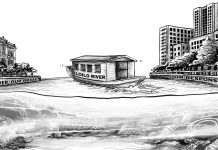




ILOILO City received a brutal warning on August 17: 197 millimeters of rain fell in just six hours, flooding 70 barangays and affecting more than 3,000 people. There was no typhoon. Yet in a matter of hours, communities were inundated and the limits of the city[s drainage and flood-control infrastructure were again exposed.
The figure becomes even more worrisome when placed in context. The 197 mm in six hours was already close to Western Visayas’ average rainfall of about 215 mm over an entire 24-hour period. What would normally be spread across a day was compressed into a fraction of that time.
This is no longer simply a drainage problem. Iloilo City is confronting a climate problem with infrastructure largely designed for yesterday’s rainfall.
For years, the familiar responses to flooding have been declogging drainage lines, clearing waterways, dredging creeks and reminding residents not to throw garbage into canals. These measures remain necessary. Clogged drainage certainly aggravates flooding. But blaming every flooded street on garbage or blocked canals risks obscuring a much larger problem: even a clean drainage system has limits when an extraordinary volume of water arrives within several hours.
That is why the city’s move toward engineering interventions and a comprehensive drainage master plan deserves urgency. The question should no longer be merely how quickly floodwater can be removed after heavy rain. The more important question is whether Iloilo’s drainage network, waterways, roads and other infrastructure are capable of handling the rainfall extremes the city is increasingly likely to face.
Engineering assumptions must evolve with climate realities.
Drainage pipes and canals designed according to historical rainfall patterns may no longer provide adequate protection under more intense precipitation. Culverts, outfalls, pumping systems and waterways must be reassessed. Natural drainage corridors must be protected. New developments must be required to demonstrate that they will not worsen runoff and transfer floodwaters to neighboring communities.
Most importantly, the city already knows where much of the danger lies. The 70 barangays flooded on August 17 had been identified as vulnerable through the city’s hydrologic study and risk assessment. That knowledge should now determine where infrastructure investments are concentrated.
Government cannot prevent extreme rainfall. But it can prevent extreme rainfall from automatically becoming an urban disaster.
This will require money, technical expertise and political discipline. Flood-control projects are expensive and often invisible when they work properly. Unlike plazas, buildings or other highly visible projects, underground drainage systems offer politicians fewer opportunities for ribbon-cutting. Yet their value becomes painfully obvious when homes are flooded, businesses close, vehicles are stranded and families are forced to evacuate.
Iloilo City has earned recognition for its transformation into a modern urban center. But genuine urban progress cannot be measured only by new buildings, business districts, condominiums and expanding commercial activity. A modern city must also possess infrastructure capable of protecting the people living within it.
The August 17 deluge should therefore become a benchmark for future planning. Engineers and policymakers must ask whether existing systems could cope if another 197 mm falls in six hours — or if the next extreme rainfall event is even worse.
Climate change is rewriting the assumptions upon which cities were built. Iloilo cannot control how much rain falls from the sky, but it can control whether its infrastructure remains trapped in the past.
The rain has changed. Iloilo City’s engineering must change with it.