


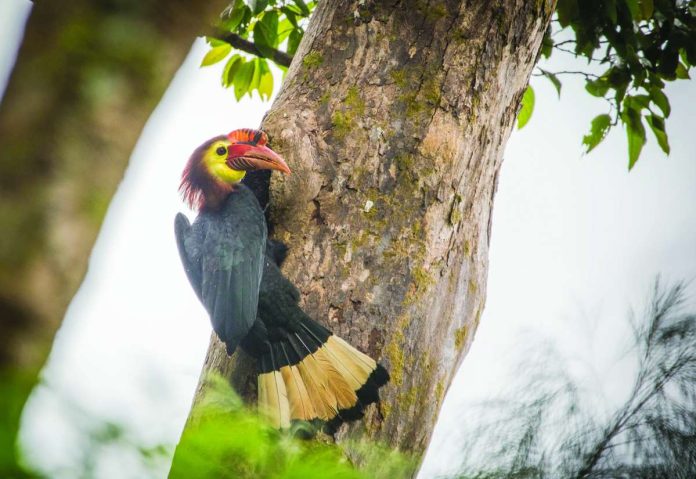
ILOILO City – More than 95 percent of the world’s remaining Dulungan hornbills are now concentrated in the Central Panay Mountain Range, according to an environmental conservation organization, putting renewed urgency on protecting the species’ last stronghold as road construction, renewable energy projects, forest loss and illegal wildlife trade increasingly threaten its habitat.
Only an estimated 1,000 to 3,000 mature Dulungan, or Rufous-headed Hornbills (Rhabdotorrhinus waldeni), remain, with the species already considered extinct in Guimaras and functionally extinct in Negros, revealed the Haribon Foundation.
The Dulungan cannot be found anywhere else on the planet.
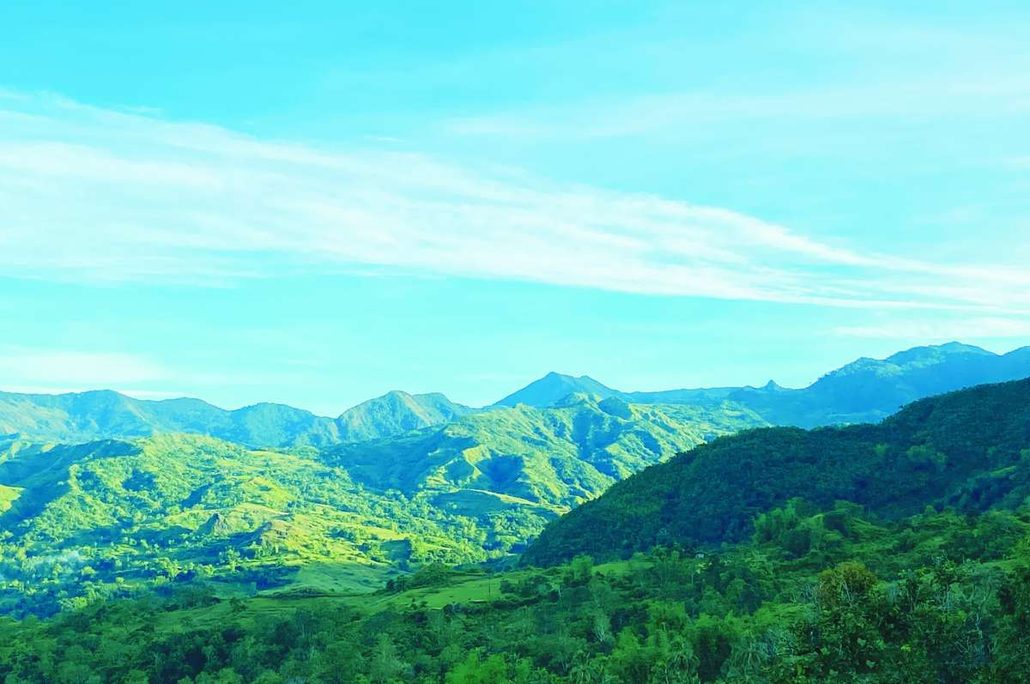
The precarious situation was underscored by the latest annual Dulungan count on August 21, when conservation groups, communities and volunteers recorded 68 birds in the Central Panay Mountain Range, compared with 59 in 2025 and 62 in 2024.
Despite the higher count this year, conservationists cautioned against interpreting the figure as evidence that the species has begun recovering.
“Numbers are stable but not yet showing a certain upward trend,” said David Quimpo, conservation research manager of the Haribon.
Numbers stable, danger remains
Known as the “Farmers of the Forest,” Dulungan hornbills are important seed dispersers that help regenerate Panay’s forests. They swallow whole fruits and excrete or drop seeds elsewhere, helping new trees grow.
Their reproduction is closely tied to mature forests because females nest inside natural tree cavities, including those in large balakbakan trees (Shorea negrosensis), where they are sealed inside during the nesting period while males deliver food through a narrow opening. Their presence shows a healthy, functioning forest.
“More community work and Dulungan counts must be made in the coming years. Due to their small numbers and limited area they are still considered Endangered on the IUCN Red List and Critically Endangered in our Philippine Red List,” Quimpo said.
The warning comes less than a year after the International Union for Conservation of Nature (IUCN) reassessed the species from “Critically Endangered” to “Endangered” in October 2025 after determining that its rate of decline had slowed over a 25-year period.
Conservationists, however, fear the improved classification could create a false sense of security.
“With the current threats faced by the species in Panay Island, which is the only island where the species is considered as functionally breeding… downlisting may give an impression that the species is now doing okay, which is not true due to the new arising threats across its range,” Quimpo said.
The slower decline has been attributed largely to sustained conservation efforts by Haribon, Philippine Biodiversity Conservation Foundation (PhilBio), Philippine Initiative for Conservation of Environment and the People (PhilInCon), and the Provincial Government of Antique, which has adopted the Dulungan as its official bird. August is also celebrated as Dulungan Month in Antique to promote protection and awareness of the bird.
Development pressures mount
Conservationists said the remaining Dulungan population continues to confront pressures from road construction, dam projects, renewable energy developments, forest loss and illegal pet trade.
Proposed wind projects cover portions of Ibajay in Aklan and Pandan in Antique that fall within the Central Panay Mountain Range and Dulungan habitat.
Road projects are also crossing the mountain range, including the Pandan-Ibajay, Laua-an-Capiz and Valderrama-Lambunao road networks.
The Central Panay Mountain Range is the longest and largest mountain chain on Panay Island, serving as a vital ecological backbone and its main watershed. It runs north to south, forming a natural boundary across the provinces of Aklan, Antique, Capiz, and Iloilo.
Haribon acknowledged the importance of renewable energy in reducing dependence on fossil fuels but stressed that clean-energy development should not sacrifice intact forests.
“We should not destroy critical habitats that hold carbon and provide us with water to produce clean power,” it said in a news release.
“True climate solutions protect biodiversity by placing clean energy projects on already degraded lands or near existing urban areas, ensuring we don’t destroy one natural defense to build another,” it added.
The group also recognized the benefits of roads in connecting communities to schools, markets and other services but warned that opening routes through forests could damage watersheds and fragment wildlife habitat.
“To protect both people and nature, we need a middle ground,” Haribon said. “This includes identifying low-impact routes that connect people without endangering the forests around us.”
Push for protected area
With almost the entire surviving Dulungan global population dependent on Central Panay, conservationists are pushing for the formal declaration of the Central Panay Mountain Range as a Protected Area to secure both Dulungan habitat and watersheds supporting communities across the island.
“Coordination and agreement from different government agencies such as the DENR (Department of Environment and Natural Resources), NCIP (National Commission on Indigenous Peoples), as well as LGUs (local government units) are key towards the declaration of the Central Panay Mountain Range as a Protected Area,” Quimpo said.
“Currently, most of the LGUs are supportive, and we have assisted the DENR in drafting the bill for CPMR, but further consultation and coordination with local IP groups is needed,” he added.
Parts of the proposed Protected Area overlap with Indigenous Peoples’ ancestral domains. Once the proposed measure is finalized, communities can seek congressional support for its approval and enactment. (Source: Haribon Foundation) (Rex J. Maestrecampo/PN)