

TODAY is supposed to be National Heroes Day, which is quite ironic — even hilarious — considering that no single official national hero has ever been proclaimed by law or executive order.
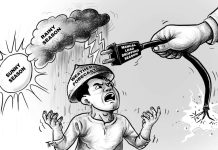
But that’s another story. Let’s talk instead about something being brewed by the usual suspects.
A lot of noise has been generated lately about the revival of the “peace talks” with the CPP-NPA-NDF. Much of this noise has been coming from the Makabayan bloc and its friends, hence this revisit.
The fact of the matter is that all 89 guerrilla fronts have been neutralized and dismantled — save for one supposedly entrenched in the House of Representatives. The CPP-NPA-NDF has shifted from armed struggle to parliamentary struggle, with the Makabayan bloc aligning itself with the so-called “maleta bloc” in Congress. No longer hiding in rural areas, they now operate in urban centers, using government resources to undermine the very government that funds them — while raking in billions in public money along the way.
The country is generally peaceful these days, except for the occasional irritation caused by development workers, cultural workers, or researchers in the countryside, sometimes with naïve “woke” leftists from the United States in tow.
Looking at the present scenario, there is really no need to revive the “peace talks,” as doing so serves no purpose beneficial to the country other than potentially breathing life into an already moribund insurgency.
And this explains why the so-called peace talks are doomed to fail. According to the late Luis Jalandoni, senior adviser of the NDFP Negotiating Panel and the CPP-NPA-NDF, peace negotiations with the government are merely another legal tool and do not replace the armed component of their struggle to overthrow the legitimate government.
“We see that peace negotiations are another form of legal struggle which is possible to be used by the revolutionary forces to advance the revolutionary armed struggle and the revolutionary mass movement.
“This other form of legal struggle, the peace negotiations, does not replace the revolutionary armed struggle or the revolutionary mass movement; in fact, it should advance, it should support this revolutionary armed struggle as the main form of struggle which is more important than the peace negotiations.”
And the main demand of the CPP-NPA-NDF is that the Comprehensive Agreement on Social and Economic Reforms (CASER) be signed prior to actually sitting down at the negotiating table.
At first glance, this document may appear to be pro-masses, as it promises to benefit the majority. But upon closer examination, the duplicitous character and self-interest of the CPP-NPA-NDF become evident, as its provisions do not directly reflect what is in the best interest of the nation, but rather what serves its own interests.
Their CASER was crafted with the goal of transforming the Philippine economic model into a nationalist and socialist one. This would mean dismantling the effects of globalization, which communists view as a major cause of the country’s continued underdevelopment.
CASER’s provisions that would designate the CPP-NPA-NDF to play a key role in implementing agrarian reform, while effectively demobilizing the Armed Forces of the Philippines (AFP) by reducing its functions largely to civil works and infrastructure construction, would be hugely detrimental to the government. The military must retain its fundamental mandate of protecting the country and its people from various threats.
“Piss talks,” indeed.
Meanwhile, National Task Force to End Local Communist Armed Conflict (NTF-ELCAC) Executive Director Undersecretary Danilo Pamonag has this to say about the government’s peace and development campaign:
Pamonag anchored his roadmap on three foundational pillars — Unity, Peace, and Development — while outlining the following key priorities for the Task Force:
* Strengthening the Whole-of-Nation Approach: Deepening coordination among national agencies and local government units (LGUs).
* Breaking Down Institutional Silos: Fostering a cohesive, results-driven bureaucracy to accelerate interagency convergence.
* Sustaining Community Presence: Ensuring Joint Regional Task Forces and National Clusters remain active and responsive in historically isolated or vulnerable areas.
* Securing Long-Term Development: Making roads, schools, health services, and economic opportunities permanent features of cleared communities to prevent any resurgence of violence.
And that is what peace talks should really be about — not “piss talks.”/PN