
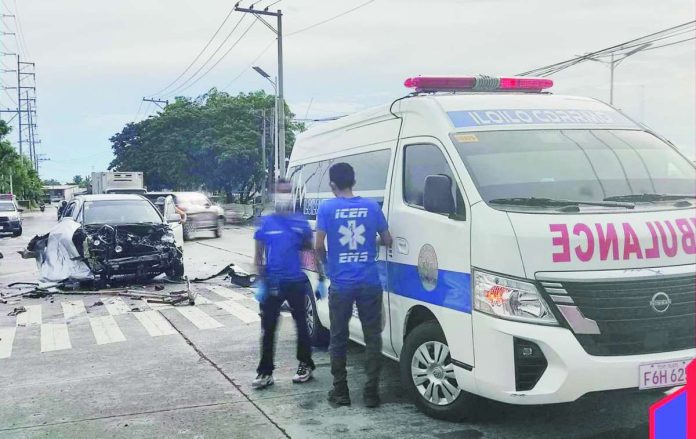
ILOILO City – Allegations that some hospital emergency rooms refuse or delay patients endorsed by the Iloilo City Emergency Response (ICER) have triggered a City Council investigation amid warnings that precious minutes lost because of unclear hospital-response protocols could mean the difference between life and death.
The inquiry will scrutinize reports that ICER-endorsed patients were denied immediate admission, including cases in which patients were allegedly made to get off emergency vehicles and walk into hospitals so they could be treated as regular walk-in patients.
Councilor Sedfrey Cabaluna raised the issue in a privilege speech following an Aug. 27 motorcycle accident involving a man who was found injured and bleeding along Dra. Rizalina V. Bernardo Avenue in Barangay San Rafael, Mandurriao district — directly in front of a hospital emergency room.
“There are reports that emergency rooms would even deny admittance of ICER endorsements for one reason or another,” Cabaluna said.
“May ara pa gani kuno nga ginpapanaog na lang kag ginpalakat pasulod sa ospital para lang tratuhon sang hospital nga walk-in patient,” he added.
Cabaluna warned that delays in providing medical attention during emergencies could have fatal consequences.
“During an emergency, every minute is important,” Cabaluna said. “Wasted time or delayed action can potentially result in a loss of life that could have been prevented if there had been an immediate response.”
The councilor stressed that the investigation is not intended to blame hospitals or medical personnel but to determine whether clear and workable protocols exist when ICER brings patients to emergency rooms.
“Let me emphasize that we are here not to point fingers. We are here to save lives,” Cabaluna said.
“I have relatives and friends in the medical profession. I know how dedicated they are to their solemn oath. We are here to ask: What are the protocols, and do they exist at all?” he added.
Cabaluna also questioned the practicality of requiring ICER to respond to emergencies occurring immediately outside or near hospitals if the patient would ultimately be brought to the same medical facility.
“If our ICER responds, where will they bring the patient? To the hospital anyway, right?” Cabaluna said.
Data from the Iloilo City Disaster Risk Reduction and Management Office (CDRRMO) showed that nine vehicular collision and medical emergency incidents near hospitals were recorded from January to August 2026, including the Aug. 27 case.
All nine incidents were eventually responded to by ICER after emergency calls were made, according to Cabaluna.
“Even if our response team is strategically located in our ICARe Centers, travel time still adds to the response time,” he said.
The Aug. 27 incident involved an overseas Filipino worker who reportedly spotted the injured motorcycle rider lying on the road and went inside the nearby hospital to seek assistance.
Cabaluna said the victim allegedly did not immediately receive first aid or a stretcher. Security guards reportedly instructed the OFW to call ICER and the police instead.
A video lasting nearly five minutes showing the incident was presented during the council proceedings, he said.
The proposed investigation in aid of legislation will be led by the Committee on Health chaired by Councilor Alan Zaldivar.
Hospital representatives and officials from the Department of Health Region 6, Philippine National Police, CDRRMO-ICER and City Health Office are expected to be brought together to determine existing emergency response and patient endorsement protocols and identify gaps that could cause dangerous delays.
The council may also consider legislation requiring hospitals with sufficient personnel and facilities to respond to emergencies occurring within a specified distance from their premises.
Among the proposals is requiring trained emergency room personnel — instead of security guards — to serve as the first point of contact for emergencies occurring within 100 meters of a hospital.
“We can strengthen coordination and endorsement mechanisms between hospital emergency rooms and our ICER to avoid delays in the delivery of medical assistance to those who need it the most,” Cabaluna said.
The councilor said the ultimate objective is to ensure that people facing life-threatening emergencies receive immediate medical attention regardless of whether they are brought in by ICER or arrive as walk-in patients.
“Truthfully, we should not even need protocols just to help someone who needs help, especially when we have the capacity to do so,” Cabaluna said./PN