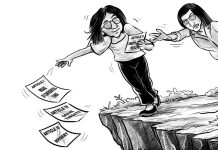




OUR STUDENTS are in an educational crisis with no clear solution. Despite years of education reforms, pandemic school closures, and increased government spending, the Second Congressional Commission on Education (EDCOM 2) report shows the harsh reality: Filipino students are 4–5 years behind in literacy.
The pandemic isolated students and exacerbated their learning deficits. These troubling findings should motivate all stakeholders in the education system, from students to policymakers, teachers, and communities.
The “backlog” in education has become so commonplace it is almost darkly comical. Our students always try to catch up, but education system data is bleak. EDCOM 2’s Year Two Report, Fixing the Foundations: A Matter of National Survival, notes that our students still learn lessons from Grade 4 by Grade 8 or 9. How did we arrive? Were we too focused on small wins to notice that our nation was falling behind in educational quality?
Acknowledging that students in remote areas, like BARMM, face unique challenges is one thing. It is different when we realize these issues are interconnected. I teach in Iloilo and have seen how even well-funded public institutions struggle with access and engagement. However, we should consider why students are four to five years behind. Could we have underestimated education’s power for decades?
Education is seen as an equalizer by many. It should be, but many learners are trapped by it. A trap that begins with a lack of resources and worsens with an evolving educational system that leaves too many students behind.
From personal experience, I have seen schools with great potential but poor basics like late textbooks, overcrowded classrooms, and outdated curricula. Even weather disruptions and some non-curricular activities led to frequent class cancellations. These challenges affect all students.
EDCOM 2’s report shows the learning crisis is not new. Its history is deep. COVID-19’s far-reaching effects exacerbated but did not cause the problem. However, it may have revealed years of poor learning infrastructure, inconsistent curriculum, and a school system that struggled to adapt to the digital age. We were too quick to admit we had failed to provide quality education, so we joined the education reform late.
The government’s focus on digital learning may be the pandemic’s silver lining. However, many students lack reliable internet or devices to access online education. Many students fell further behind after 2020’s online learning shift.
As an educator, I saw how students already struggling with academic pressure had to deal with resource shortages. Only 31% of our college students have basic literacy skills, according to EDCOM 2, and this problem is especially severe for those 50–70. (To be continued)/PN