

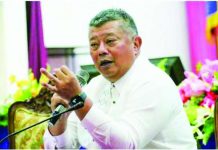

ILOILO City – MORE Electric and Power Corp. (MORE Power) is inching closer to finally taking over the power distribution system here.
In a unanimous decision, the Supreme Court (SC) En Banc has stopped the implementation of the ruling of the Regional Trial Court (RTC) in Mandaluyong City declaring two sections of MORE Power’s franchise law void and unconstitutional.
Aside from RTC Mandaluyong City Branch 209 presiding Judge Monique Quisumbing-Ignacio, also enjoined from implementing the lower court’s ruling was Panay Electric Co. (PECO), their agents, representatives or persona acting in their behalf.
MORE Power president Roel Castro welcomed the issuance of the TRO. In a statement, he said it underscored the following:
* MORE Power has a clear and unmistakable right to be protected
* there is material and substantial invasion of such right
* there is an urgent need for the writ to prevent irreparable injury to MORE Power, and
* no other ordinary, speedy and adequate remedy exists to prevent the infliction of irreparable injury other than the issuance of the TRO
PECO’s franchise as sole power distributor in Iloilo City expired on Jan. 19 this year. It failed to secure an extension from Congress over several issues such as poor customer relations, erroneous billings, power failures, high rates, etc.
Congress instead granted MORE Power a 25-year franchise to distribute electricity in the city. President Rodrigo Duterte signed this legislative franchise law, Republic Act (RA) 11212, on Feb. 14 this year.
However, PECO – the sole power distributor here for over 95 years – questioned the constitutionality of RA 11212. In July it managed to secure a favorable ruling from RTC Mandaluyong City Branch 209 which declared void and unconstitutional sections 10 (right of eminent domain) and 17 (transition of operations) of the franchise law.
MORE Power brought the matter to the Supreme Court.
This latest high court ruling was issued just this Dec. 3. Castro said it was “a manifestation of the rule of law.”
“The basic rule is that every law has in its favor the presumption of constitutionality. To justify the nullification of sections 10 and 17 of RA No. 11212 there must be a clear and unequivocal breach of the Constitution and not one that is doubtful, speculative or argumentative,” Castro stressed.
He also lamented that the RTC Mandaluyong City Branch 209 was being used repeatedly to cast doubt on the propriety of the expropriation case that MORE Power filed against PECO before the RTC in Iloilo City.
“With the issuance of the TRO by the Supreme Court, MORE Power is confident that the lower court will take its cue and decisively rule on the Application for the Issuance of the Writ of Possession. With all due respect, the law and rules are clear: Upon compliance with the requirements, a petitioner in an expropriation case is entitled to a writ of possession as a matter of right and it becomes the ministerial duty of the trial court to forthwith issue the writ of possession,” Castro said.
According to the Supreme Court, the TRO it issued should remain in effect until further orders from it.
Last month, Branch 35 here suspended the proceedings in the expropriation. Presiding Judge Daniel Antionio Gerardo Amular cited supervening events that placed the court in a situation – whether to proceed not with the implementation of the writ of possession against PECO.
The previous judge handling the expropriation case, Judge Yvette Go of RTC Branch 37, issued a writ of possession against PECO’s assets before inhibiting herself.
Among others, Amular noted the Supreme Court’s pronouncement that the issue of the franchise law’s constitutionality would be like a prejudicial question to the expropriation case as it would be a waste of time and effort to appoint evaluation commissioners and debate the market value of the property sought to be condemned if it turns out that the condemnation was illegal.
“The question of constitutionality is of paramount importance in the interest of legal and procedural fairness in view of the novelty of the case,” said Amular.
“Indeed, the ruling of the Honorable SC will guide this Court whether the authority conferred upon the plaintiff as a quasi-public corporation by Congress has been correctly or properly exercised by it,” he added./PN