



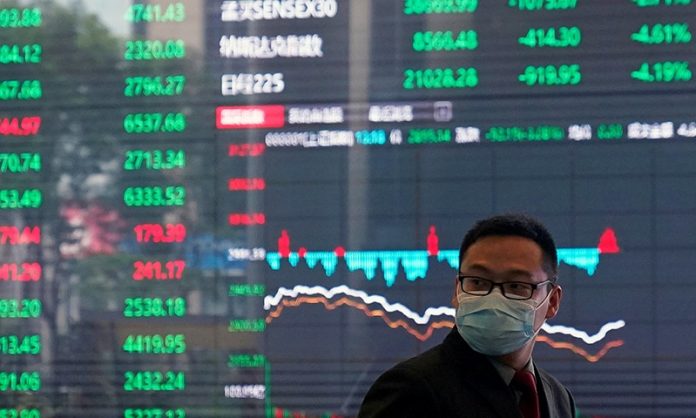
LONDON – Coronavirus panic sent world share markets skidding again on Friday, compounding their worst crash since the 2008 global financial crisis and pushing the week’s wipeout in value terms to $5 trillion.
The rout showed no signs of slowing as Europe’s main markets slumped three to five percent and the ongoing dive for safety sent yields on US government bonds, seen as probably the securest asset in the world, to fresh record lows.
Hopes that the epidemic that started in China would be over in months and that economic activity would quickly return to normal have been shattered this week as the number of international cases spiralled.
Bets are now that the Federal Reserve will cut US interest rates as soon as next month and other major central banks will follow to try and nurse economies through the troubles and stave off a global recession.
“Investors are trying to price in the worst case scenario and the biggest risk is what happens now in the United States and other major countries outside of Asia,” said SEI Investments Head of Asian Equities John Lau.
Disruptions to international travel and supply chains, school closures and cancellations of major events have all blackened the outlook for a world economy that was already struggling with the US-China trade war fallout.
In Asia, MSCI’s regional index excluding Japan shed 2.6 percent. Japan’s Nikkei slumped 3.7 percent on rising fears the Olympics planned in July-August may be called off due to the coronavirus.
The global rout knocked mainland Chinese shares, which have been relatively well supported this month, as new coronavirus cases in the country fell and Beijing doled out measures to shore up economic growth.
The CSI300 index of Shanghai and Shenzhen shares dropped 3.5 percent, to bring its weekly loss to five percent and the worst since April.
Oil prices languished at their lowest in more than a year having plunged 12 percent this week – the worst since 2016 – while all the major industrial metals have dropped between three percent and six percent.
The appeal of guaranteed income sent high-grade bonds rallying. US yields – which move inversely to the price – plunged with benchmark 10-year note yields hitting a record low of 1.1550 percent in frenzied European trading. It last stood at 1.1847 percent.
That is well below the three-month bill yield of 1.43 percent, deepening the so-called inversion of the yield curve. Historically an inverted yield curve is one of the most reliable leading indicators of a US recession.
Expectations the Fed will cut interest rates to cushion the blow are rising in money markets. Analysts say Fed funds futures are now pricing in about a 75 percent chance of a 25 basis point cut at the central bank’s March 17-18 meeting.
The European Central Bank historically lags the Fed but it is now seen cutting by another 10 basis points by June. (Reuters)