

ILOILO City – In a bid to avert a community transmission of SARS-CoV-2 which causes the coronavirus disease 2019 (COVID-19) in Arevalo district’s Barangay Sto. Niño Sur, the city government has stepped up contracting tracing.
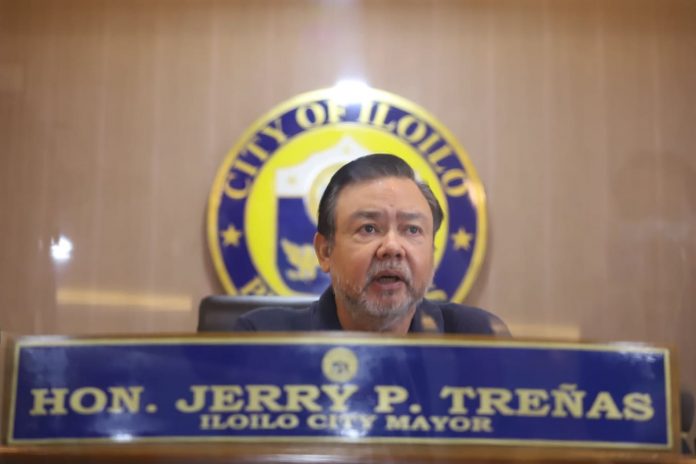
Over 100 contacts of the village’s initial five confirmed COVID-19 cases have so far been traced and specimens were collected from them for analysis, according to Mayor Jerry Treñas.
He requested Department of Health (DOH) Region 6 director Dr. Marlyn Convocar to prioritize the testing of these specimens. The city government would decide on what moves to take next based on the test results.
The testing is being done at the Western Visayas Medical Center laboratory in Mandurriao district.
The first confirmed COVID-19 case in Barangay Sto. Niño Sur was a driver of the Iloilo City Emergency Responders (the region’s COVID Patient No. 66).
As of yesterday, May 7, the number of COVID-19 cases in the village rose to six. The additional case was one of the two new cases from Arevalo that DOH Region 6 confirmed.
This new Barangay Sto. Niño case was a 46-year-old male (Patient No. 88) currently under quarantine at a city government facility, said Treñas.
The other new Arevalo case was a resident of Barangay Quezon – a 33-year-old male and the region’s Patient No. 85 now in isolation at a hospital.
As this was being written, Treñas could not be certain yet if Patient No. 88 had close contact with the first five Barangay Sto. Niño Sur COVID-19 cases (now all on quarantine at a city government facility):
* 55-year-old female (Patient No. 73)
* 43- year-old female (Patient No. 78)
* 57-year-old female (Patient No. 79)
* 48-year-old female (Patient No. 80)
* 48-year-old male (Patient No. 66)
According to the World Health Organization (WHO), ramping up testing is the best way to slow the spread of COVID-19 as shown in China, South Korea and Singapore.
Without testing, cases cannot be isolated and the chain of infection will not be broken, said WHO secretary general Tedros Adhanom Ghebreyesus.
People can catch COVID-19 from others who have the virus. The disease can spread from person to person through small droplets from the nose or mouth which are spread when a person with COVID-19 coughs or exhales.
These droplets also land on objects and surfaces around the person. Other people then catch COVID-19 by touching these objects or surfaces, then touching their eyes, nose or mouth.
Aside from contract tracing and testing, Treñas also ordered the City Health Office to prepare for a disinfection of Barangay Sto. Niño which he placed on an “extreme enhanced community quarantine” (EECQ) for 72 hours beginning May 6.
Barangay Sto. Niño Sur has 2,015 households.
During the three-day lockdown of Barangay Sto. Niño, the following must be observed within the barangay:
* residents must stay at home
* offices and businesses are closed
* quarantine passes are suspended
* transportation (private and public) is suspended
These restrictions, however, do not apply to persons who need immediate hospital care and management and those persons allowed by the executive order.
For the duration of the EECQ, the city government “shall provide the food and medical needs of the residents…Barangay officials shall secure the list of necessary medicines of the residents (and) submit (this) to the City Health Office immediately.”/PN