

BY IME SORNITO AND GLENDA TAYONA
ILOILO – Local chief executives (LCEs) here agree that the government, in the name of public health and general welfare, may restrict unvaccinated Filipinos to their houses to contain the spread of coronavirus disease 2019 (COVID-19). But not at this time when vaccine supplies are limited.
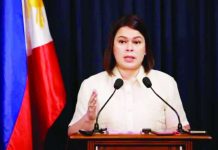
Such measure must have the concomitant responsibility of the State to provide and make the vaccines available to the public, said Mayor Rema Somo of Santa Barbara.
“Ginakulang gani sa bakuna. Karon kon indi mo sila pagpasugtan makagwa ti diin ang bakuna nga ihatag naton sa ila?” she asked.
President Rodrigo Duterte recently said he could not wait for a law to punish unvaccinated Filipinos and he wanted the police and barangay captains to restrict the movement of people who do not want to get vaccinated against COVID-19.
“You (unvaccinated) are a walking spreader,” Duterte said during a July 28 meeting with the country’s COVID-19 task force officials.
“‘Pag ayaw nila magpabakuna, ‘wag silang palabasin ng bahay. ‘Pag lumabas kayo ng bahay, sabihin ko sa mga pulis, ibalik ka doon sa bahay mo. You’ll be escorted back to your house,” he added.
Somo said this maybe Duterte’s way to encourage residents to avail themselves of the jabs, but she hoped for more vaccine allocation.
“In fact duro nagapila, duro naga-text…(but) waay man ‘ko ihatag kay ti nagahulat man kita sang supply,” she said.
Alimodian’s Mayor Geefre Alonsabe had a similar sentiment.
“Paano mabakunahan ‘na kay wala man bakuna nga available? Ma-implement naton ‘na kon ang ila bakuna available,” Alonsabe said.
For now, the town mayor said the local government unit (LGU) would follow the vaccination prioritization list.
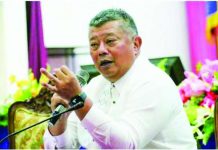
Mayor Mark Palabrica of Bingawan described the President’s idea as good, however, “importante anay siguro mabakunahan ang tanan.”
He said it would also be unfair for economic frontliners (A4 priority group) and other sectors if they would be restricted in their homes given that there’s a prioritization for vaccination.
“Dapat ang himuon una amo nga bakunahan naton tanan before i-impose ang restriction,” Palabrica told Panay News. “Dapat may available nga vaccines.”
Palabrica noted that as far as Bingawan is concerned, they are imposing a “no vaccine, no travel” order on all LGU employees with comorbidities and senior citizens.
Senate Minority Leader Franklin Drilon, meanwhile, agreed with the President.
He said the government may impose the restrictions to contain the transmission, especially of the Delta variant of SARS-CoV-2, the virus causing COVID-19.
“It is correct that those unvaccinated should stay home. If they go out, the process of escorting them back to their homes is a reasonable exercise of state power to protect public health,” Drilon said.
“However, a law must be passed if the government wants to punish, arrest, or jail those unvaccinated from going out,” he added.
“The State may also interfere with personal liberty to promote the general welfare as long as the interference is reasonable and not arbitrary,” the former justice secretary stressed.
In the United States, the Ilonggo senator said, the exercise of police power in promoting public health and safety has long been upheld.
In 1905, the US Supreme Court in Jacobson vs Commonwealth of Massachusetts [197 U.S. 11 (1905)] upheld the compulsory vaccination of persons over the age of 21 against smallpox. It ruled that the vaccination program had a “real and substantial relation to the protection of the public health and safety.”
Drilon also cited Zucht vs King [260 U.S. 174 (1922)] wherein the parents of an unvaccinated child excluded from school challenged the ordinance requiring vaccinations for schoolchildren as violative of the Equal Protection and Due Process clauses.
The Court held that “it is within the police power of a State to provide for compulsory vaccination” and that the ordinance did not bestow “arbitrary power, but only that broad discretion required for the protection of the public health.”
‘NOT THEIR CHOICE’
However, Drilon emphasized that such must be weighed carefully because many Filipinos remain unvaccinated – not out of their own choice.
“It’s a policy call of the President but the government must look into factors why many Filipinos remain unvaccinated. Some areas have limited access to vaccines, slow roll or the vaccines available are not what the people prefer,” Drilon said.
The State, he said, has the responsibility to make the vaccines available to the public.
Drilon also stressed that there must be a uniform vaccine card with basic security features to prevent forgeries.
CHR’S TAKE
Atty. Jonnie Dabuco, director of the Commission on Human Rights (CHR) in Region 6, said there is no basis for the police to apprehend unvaccinated persons.
He said the statement of the President “daw problemado bala.”
“Kon maggwa ka as unvaccinated tapos ano? Dakpon ka or i-pabalikon sa balay? Ti kon indi ka ‘ya ‘bi magbalik? That will create a big problem,” Dabuco said.
He added: “Waay basis ang ila action. It is tantamount sa violation sang liberty sang tawo. Ti, dapat may laye gid ‘na. Kon wala sang laye mangin illegal gid ‘na sia.”
Dabuco said there are other ways to encourage people to get vaccinated such as countering fake news about vaccines.
He believed that if the people are well-informed, they can be easily encouraged to get vaccinated.
“Ako nagapati gid sa vaccination nga solution sa problem pero I would say ma-encourage ang mga tawo nga magpa-vaccine kon naintindhan gid nila kun ano ang vaccine,” he added.
Also, the national government can give incentives to those who get vaccinated.
“For instance may libre nga kon ano puede mahatag nga incentive para ma-encourage ang aton pumoluyo,” Dabuco said./PN