



ILOILO City – To promote the potential of the coffee, cacao and coconut industries in the Philippines, the establishment of sustainable and competitive programs for these three crops is being pushed.
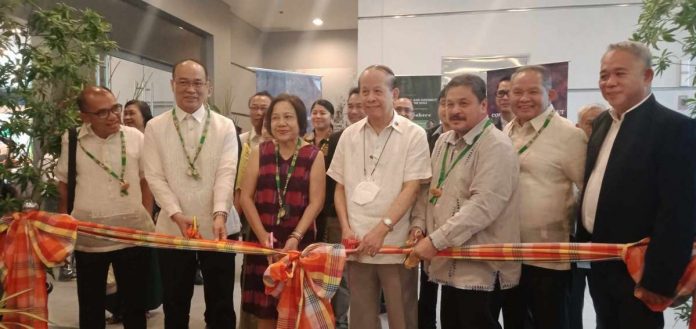
A three-day Coffee, Cacao and Coconut (CoCaNut) National Congress, with the theme “Thriving and Innovating through Changing Climates”, kicked off yesterday at the Iloilo Convention Center in Mandurriao district.
The congress is organized by the Panay Organization for Progressive Agriculture (POPA) Cooperative chaired by Dr. Louie Tirador, with Larry Nacionales, POPA Cooperative chairperson for the CoCaNut Congress, and in collaboration with the Iloilo City Government, Iloilo Provincial Government, Regional Agricultural and Fishery Council (RAFC) 6, and Regional Line Agencies of Western Visayas such as the Department of Agriculture (DA), Department of Trade and Industry (DTI), and Department of Environment and Natural Resources (DENR).
Sen. Cynthia Villar, who graced the event, said the Congress provides a venue to discuss the issues affecting these crops, such as low yield and production volume, aging trees, lack of good agricultural practices (GAP), scarcity of high-yielding planting materials, processing, access to credit, and economies of scale.
“There is a need to establish sustainable and competitive coffee, cacao and coconut industries, and I believe that this is the objective of this CoCaNut Congress,” Villar said in front of hundreds of participants from all over the country.
She said, while the country’s coffee production remains relatively low and is unable to meet local demand, with a production of 62,062 metric tons of green coffee beans in 2019 and a demand of 100,000 metric tons, or just 32.40 percent, locally produced, the country is dependent on coffee imports.
But the good news is that the country’s warm and humid climate provides an ideal setting for cultivating coffee.
Similarly, cacao poses a very good potential for increased income for farmers, she said.
“If protocols on cacao farming are followed, a hectare of 1,000 fully grown cacao trees yields P450,000 in gross income annually, or P37,500 a month. If dried, roasted and formed into chocolate tablets or tablea, it will go higher. Another excellent option for farmers,” the senator added.
Regarding coconut production, the Philippines is the second largest producer in ASEAN, next to Indonesia, and is considered a major export, contributing 3.6 percent of the country’s gross value-added (GVA) in agriculture.
Villar said that by planting hybrids, a coconut tree could produce 120 nuts per year and triple farmers’ income.
In 2021, the Senate passed Republic Act (RA) No. 11524, or “The Coconut Farmers and Industry Trust Fund Act”. It has a P75-billion trust fund from coco levy assets to bankroll the development of the coconut industry.
This law aims to consolidate the benefits due to coconut farmers, especially the poor and marginalized, to attain increased income for coconut farmers, alleviate poverty and achieve social equality.
With at least P5 billion in funding a year, the law allocated farm improvements through diversification and/or intercropping with livestock, dairy, poultry, coffee and cacao production, of which 10 percent shall be shared equally, or P166.6 million each, by the National Dairy Authority and the DA’s High-Value Crops Development Program and BAI-Native Animal Program.
“Poverty reduction can be attained by stimulating economic growth to increase incomes and expand employment opportunities for the poor in rural areas. I am working with you to provide opportunities for the agriculture sector to help farmers help themselves,” Villar said.
Meanwhile, President Ferdinand “Bongbong” Marcos Jr., in a message read by DA Senior Undersecretary Domingo F. Panganiban, said he recognizes the significance of this event in the development of the immense potential of the coffee, cacao, and coconut industries in the country.
“This gathering serves as a significant platform where we collectively recognize the role of coffee, cacao, and coconut as integral components of our nation’s economic growth,” Marcos said. “This administration is focusing on the entire agricultural value chain, from production to processing to marketing, ensuring that our farmers receive fair compensation for their products while making nutritious food accessible to consumers.”
For the President, by fortifying production and export capabilities in these three sectors, production capabilities should be strengthened and extended beyond borders to increase the international demand for our fine coffee, cacao, and coconut products. This will not only boost economic prospects and showcase the world-class quality of the country’s agricultural products but also create countless job opportunities and economic growth for businesses, farmers, and local communities.
Also present in the opening ceremony was Gov. Arthur Defensor Jr., who hoped local farmers would take advantage of the Congress to develop tangible strategies and solutions to address the gaps in these three industries.
“We want to see a multi-million dollar industry that is competing with the rest of the world. Gusto nating makita na dumating ‘yong araw na walang dadala ng pasalubong na chocolate from the US, Canada and Australia because they are already here,” Defensor said.
Iloilo City’s Mayor Jerry Treñas, in a message read by Local Economic Development and Investment Promotion officer Velma Lao, said that, as the local chief executive, he believes that collective and strong support both from the government and private sector is essential and needed for the growth of this industry. Local farmers and producers who are here today need to up-scale and empower themselves with innovative techniques and new knowledge, he added.
Treñas expressed support for the Congress, which could further Iloilo City as an investment hub to many thriving agriculture-related businesses.
For one, coffee shops are now sprouting everywhere in the city, a manifestation of how the Ilonggos love coffee, and as support, the Iloilo City Government has been collaborating with the DTI, DA and private sectors in different endeavors to help our local micro-, small-, and medium-sized enterprises.
“Iloilo City has been awarded as the most business-friendly LGU outside the NCR; it is my fervent wish that you reach the goals of your Congress. Let us all continue to work together and bring the local coffee, cacao, and coconut industries to the next level,” Treñas said./PN