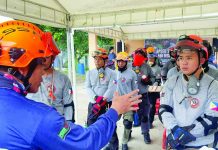



ILOILO — Western Visayas’ first full-scale, multi-sector disaster simulation has exposed coordination, response-time and hospital referral gaps that authorities will now address to strengthen the region’s ability to handle mass-casualty emergencies.
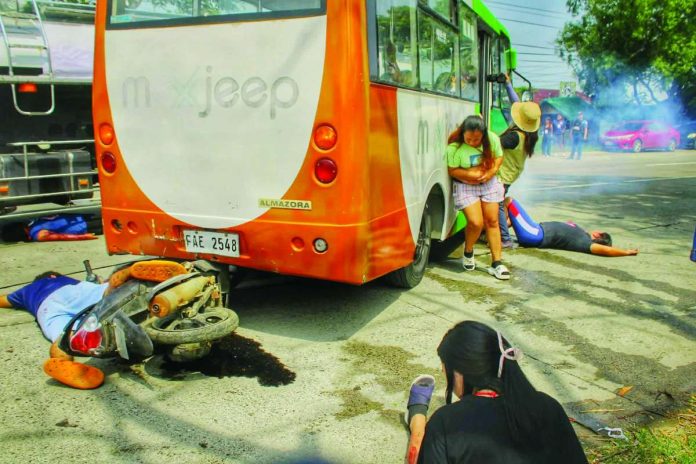
More than 30 government, private, healthcare, humanitarian and academic institutions were put through a high-pressure test Wednesday, September 9, as PROJECT MedX: Western Visayas Emergency Medical Simulation Exercise (SimEx) staged a multi-vehicle crash involving a chemical tanker along the Circumferential and Bypass Roads in Barangay Pakiad, Oton, Iloilo.
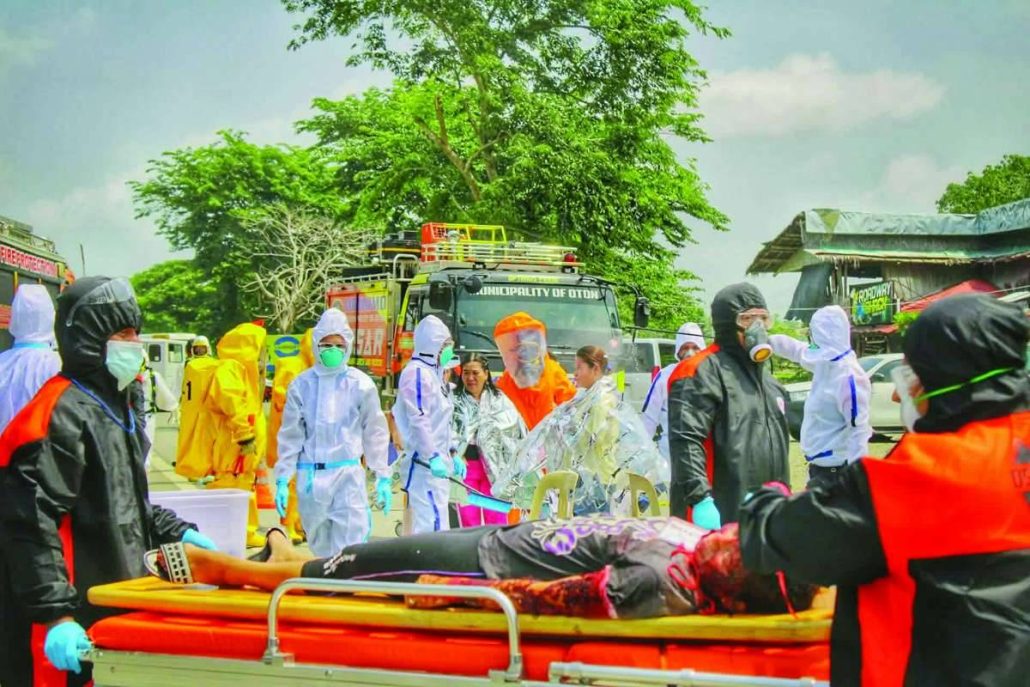
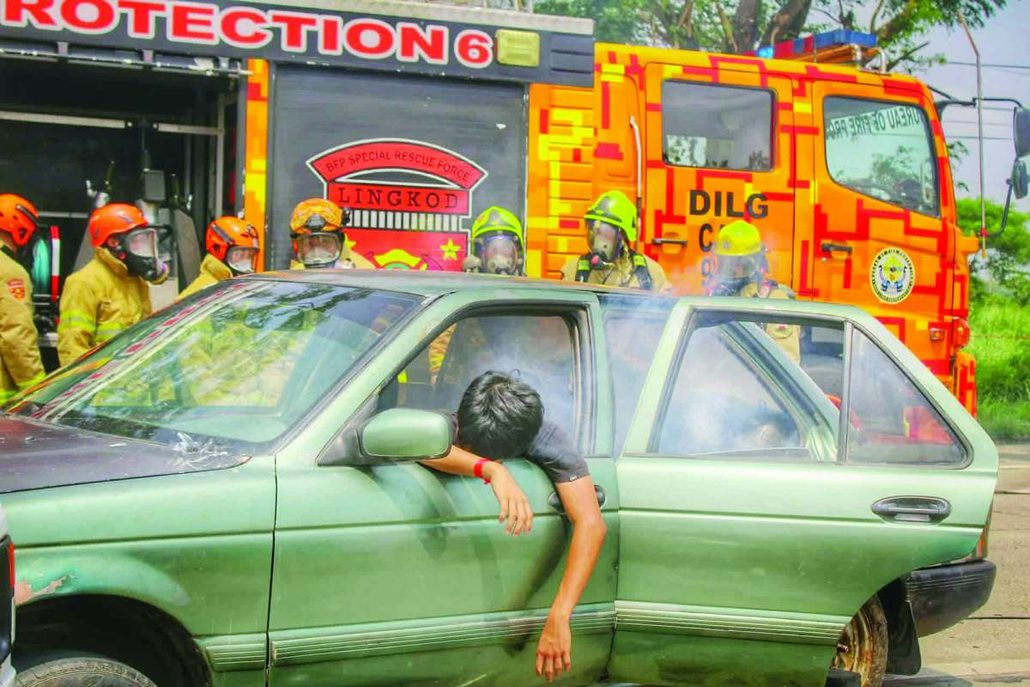
The scenario forced emergency teams to simultaneously rescue and triage multiple casualties, contain a simulated hazardous chemical spill, coordinate ambulance movements, and prepare public and private hospitals to receive patients.
The exercise was designed not to demonstrate a flawless disaster response system, but to identify weaknesses before responders are confronted with a real catastrophe, said Athena Peñaloza, executive director of the Asia-Pacific Alliance for Disaster Management Philippines (A-PAD PH), main organizer of the SimEx.
“We saw many strengths and identified initial gaps… and overall, the SimEx is a success. We are not looking for perfection. We are not trying to say na ‘okay kami’ [that we are completely fine], but we are trying to take note and identify these gaps. We can build on this to make a better, resilient, and more unified response,” she said.
Among the areas immediately identified for closer evaluation are coordination between government health offices and private hospitals, emergency response times, and the capacity of neighboring municipalities to reinforce Oton during a major disaster.
“On top of my head is the coordination between health offices and private hospitals, the response time of the different responders, and sisilipin din natin [we will also look into] how our neighboring towns in Oton can respond… what worked, what didn’t work,” Peñaloza stressed.
The exercise marked the first time disaster-response institutions across Western Visayas were tested together under a unified, real-time operation of such magnitude.
“In the whole Western Visayas, this is the first time,” Peñaloza said.
PROJECT MedX sought to bridge institutional boundaries that could hamper emergency operations when government responders, private hospitals and other organizations must work simultaneously.
“One of our flagship programs is conducting medical emergency simulation, to simulate mass casualty on different protocols, communication, and coordination between the private and the public,” Peñaloza explained.
“The value that we want to bring… we want to ensure that all sectors are aligned in one response in an emergency. Emergency and disaster don’t have boundaries,” she stressed.
CRASH, CHEMICAL SPILL
The simulation centered on a head-on collision involving a commercial chemical tanker and several passenger vehicles, creating a mock disaster zone involving both traumatic injuries and hazardous-material exposure.
The staging area and medical triage center were established at Oton National High School.
Responders were tested on the Incident Command System, or ICS, to determine whether municipal disaster teams, provincial health personnel, military units, hospitals and other organizations could operate under a unified command structure.
The exercise also tested hazardous-material containment, including chemical risk assessment, isolation of the danger zone, decontamination and communication of chemical hazards to hospitals.
Emergency teams performed mass-casualty triage, vehicular extrication and field stabilization while operating under time pressure.
Patient transportation was likewise distributed across participating public and private hospitals to evaluate medical surge capacity, hospital coordination and traffic routing during a large-scale emergency.
SAFER PATIENT TRANSFERS
The Office of Civil Defense (OCD) Region 6 and Regional Disaster Risk Reduction and Management Council (RDRRMC) 6 are also pushing for tighter medical supervision when casualties are transported from disaster sites to hospitals.
RDRRMC 6 chairperson and OCD-6 regional director Raul Fernandez said medical personnel should be involved throughout patient transfers to reduce the risk of complications while casualties are in transit.
“Protocols on patient referrals from incident sites to hospitals should be accommodated by medical personnel to avoid emergencies during transportation,” Fernandez said.
This includes ensuring trained responders or medical personnel accompany patients during transport and maintaining communication between field teams and receiving hospitals so emergency rooms can prepare before casualties arrive.
Standardized procedures between rescue sites and hospitals could also prevent secondary injuries and avoidable complications.
Participating agencies will now analyze response times, communication systems, operational performance and cross-jurisdictional coordination observed during the exercise.
“We saw many strengths and identify initials gaps.., however, overall the SimEx is a success,” Peñaloza emphasized.
Findings from PROJECT MedX are expected to help refine standard operating procedures and regional disaster-response protocols, particularly in coordinating government agencies, private institutions, hospitals and neighboring local governments during large-scale emergencies.
For A-PAD PH, the ultimate test will not be how well agencies performed during Wednesday’s simulation, but whether the weaknesses uncovered are corrected before Western Visayas faces the real thing./PN