




ILOILO City – Two groundbreaking publications that delve into the history, traditions, and contemporary realities of the Ati and Panay Bukidnon peoples were launched on Aug. 9.
This initiative was hailed as a vital step in preserving the cultural heritage of Panay and Guimaras.
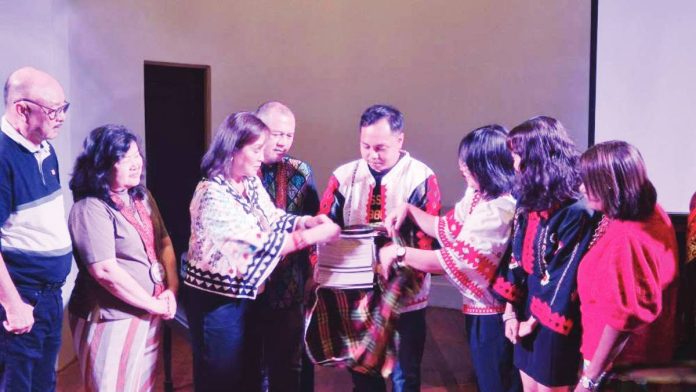
Held at the Pagwa Performing Arts Hall of the Museum of Arts and Cultural Heritage at UP Visayas, the event featured the unveiling of Panagway: The Ati in the Narratives and the Archives and Bádbad: Untangling Archived Knowledges on Panay Bukidnon Life and Culture.
Both works draw from archival research, secondary literature, unpublished materials, and first-hand interviews to present an in-depth portrayal of these indigenous communities.
“It is rare to find young scholars digging into the archives of the almost voiceless minority of Central Philippines — the Ati, Ata, Ita, or other names referring to the Visayan aborigines. You may, in the course of reading it, challenge what many scholars claim as ‘myths’. To hear the voices of the researched, other than the researcher, retrieves the balance of the long one-sided scale,” said Dr. Maria Christine Muyco, of the University of the Philippines’ (UP) College of Music.
Dr. Vicente Villan of the UP Department of History, emphasized the importance of the publication, saying, “The publication of Panagway is important because it offers a space to celebrate indigenous communities and their vibrant culture. This book will be important for developing a solid academic approach to sharing stories about the significance of cultural heritage, responsible heritage management, and the use of cultural resources essential for shaping the identity, valuing culture, and grasping history.”
Authored by Prof. Frances Anthea Redison, Kyla Agnes Ramirez, and Theodore Ricardo Bautista, Panagway focuses on the narratives of the Ati, blending historical accounts and present-day experiences.
Conversely, Bádbad, authored by Prof. Jose Taton Jr. and Josie Jane Tambirao, examines the Panay Bukidnon’s intricate knowledge systems and cultural practices while addressing threats to their identity.
“Linguists, anthropologists, historians, biologists, cultural workers, educators, medical workers, fishermen, and agriculturists can all learn from the indigenous knowledge of the Sulod people that is still current among them. Creatives of all sorts should also be inspired by this book — culinary concocters, crafts enthusiasts, fashion designers, performers, writers. This book provides all Filipinos a vital link to our precolonial past,” said Dr. Erlinfa Alburo of the Cebuano Studies Center, University of San Carlos.
Dr. Christine Godinez-Ortega of Mindanao State University – Iligan Institute of Technology noted, “The practicality of a handy reference in the study of Panay Bukidnon is a good development and should encourage scholars in cross-referencing sources to check how the present study Bádbad has been updated within a given period to validate what has been collected by far, as well as to know about the methodology of other scholars who have studied the indigenous group through their own purposes and their own lenses.”
The project, completed within a year with P2 million funding from Sen. Loren Legarda’s office through the UP Visayas Office of the Vice Chancellor for Research and Extension, was implemented by the Office for Initiatives in Culture and the Arts (OICA).
The launch coincided with the International Day of the World’s Indigenous Peoples 2025, themed “Indigenous Peoples and AI: Defending Rights, Shaping Futures,” and featured cultural performances and community testimonies from Ati and Panay Bukidnon representatives.
Legarda, chair of the Senate Committee on Culture and the Arts, underscored the continuing importance of safeguarding indigenous heritage as a foundation of national identity./PN