


ILOILO City – In the wake of consecutive strong earthquakes that rocked parts of the Visayas and Mindanao, the Iloilo City Government is stepping up its preparedness for potential building collapse scenarios, ensuring that its rescue teams and equipment are ready to respond within minutes of a disaster.
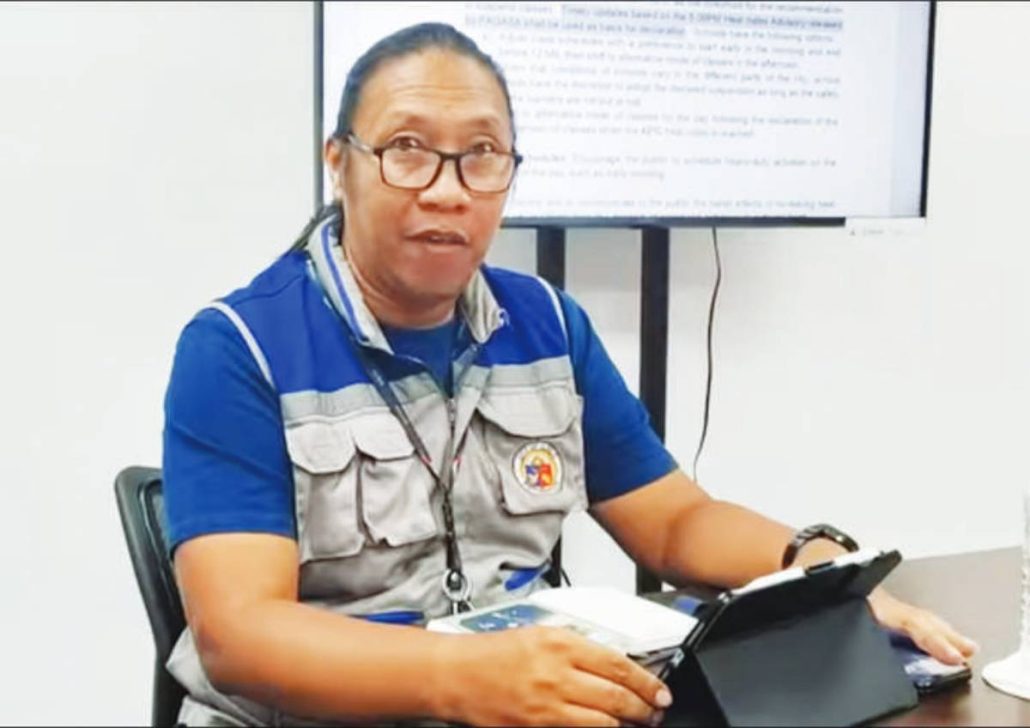
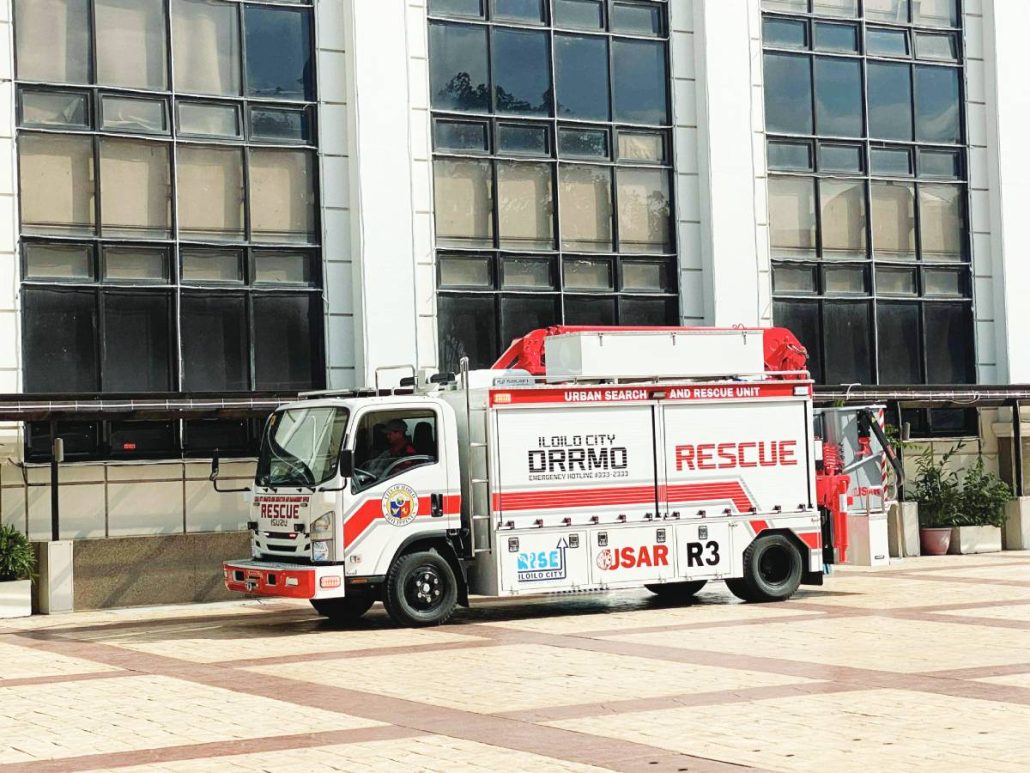
“Our city is already equipped. We have three rescue trucks, and our Urban Search and Rescue (USAR) Team is capable of penetrating medium to large infrastructures,” said Darwin Papa, chief of the Disaster Response Division of the Iloilo City Disaster Risk Reduction and Management Office (CDRRMO).
“We can lift collapsed objects, perform confined-space rescues, and respond to hazardous situations if necessary,” he stressed.
Papa said the city’s USAR team consists of ten trained technical rescuers, all certified in structural collapse response, hazardous materials handling, and confined-space operations. These rescuers regularly undergo advanced simulations and refresher training to maintain peak readiness.
“In terms of personnel, our in-house USAR team is highly trained. We also conduct cross-training with the Philippine Red Cross, the Bureau of Fire Protection (BFP), and our volunteer organizations like the Federation Fire and ICAG,” he explained. “This ensures that all our responders — whether government or volunteer — have the same knowledge, skills, and capacity to use the city’s equipment during search and rescue operations.”
The CDRRMO’s inventory includes modern hydraulic cutters, portable rescue tools, and upgraded communication systems for emergency coordination. Papa noted that government and volunteer groups can share resources during large-scale operations.
“Our equipment and those of volunteer groups are quite similar, that’s why we train together,” he said. “Some of the city’s tools are the latest models, while volunteers have large-scale equipment. Cross-training allows everyone to operate whatever is available on scene during a major incident.”
Papa added that the city has also established coordination with private construction firms for the possible use of heavy equipment like cranes and backhoes, though their deployment follows strict safety protocols.
“During the first 24 to 72 hours, we rely on portable rescue tools. Heavy equipment can cause vibrations that may worsen the collapse or endanger trapped survivors,” he noted. “We only deploy them for retrieval operations once we’re sure there are no more live victims.”
Addressing the issue of evacuation in high-density areas, Papa said Iloilo City remains relatively advantaged because many high-rise buildings still have open spaces nearby that can serve as temporary evacuation zones.
“Although we now have high-rise buildings, many still have enough open space nearby for temporary evacuation — either in front or within their township areas,” he said.
He added that all high-rise buildings are required to conduct quarterly emergency and fire drills for tenants.
“Our high-rise establishments are mandated to hold quarterly earthquake drills and fire drills,” Papa said. “This helps ensure that both employees and residents know how to respond during emergencies.”
While acknowledging that no city can ever be completely disaster-proof, Papa said Iloilo City continues to strengthen its capacity and coordination mechanisms to ensure a rapid and organized response.
“We never wish for calamities to happen, but our approach is to prepare for the worst,” he emphasized. “If a structure collapses or people become trapped, we have the equipment, personnel, and coordination systems ready to respond immediately.”
The CDRRMO is also expanding its collaboration with barangay disaster teams, private firms, and national agencies to build a unified safety network across the city.
The strongest earthquake ever to strike Panay Island – and Iloilo City for that matter – hit on January 25, 1948 — a magnitude 7.8 tremor that came to be known as the “Lady Caycay” quake.
With its epicenter near Anini-y, Antique, the quake registered a Mercalli intensity of X (“Extreme”), tearing open fissures as wide as four meters across Iloilo and Antique.
The shaking even triggered a small tsunami along the Iloilo Strait that reportedly claimed two lives.
At least 21 people were killed and 43 others injured. Fifty-five Spanish-era churches were damaged, 17 of them collapsing entirely.
In Iloilo, historic belfries in Jaro, San Joaquin, and Arevalo toppled. Bridges crumbled, buildings gave way, and the land itself split open.
The “Lady Caycay” earthquake remains the second-strongest in Philippine history, next only to the 7.8-magnitude Luzon earthquake of 1990./PN