


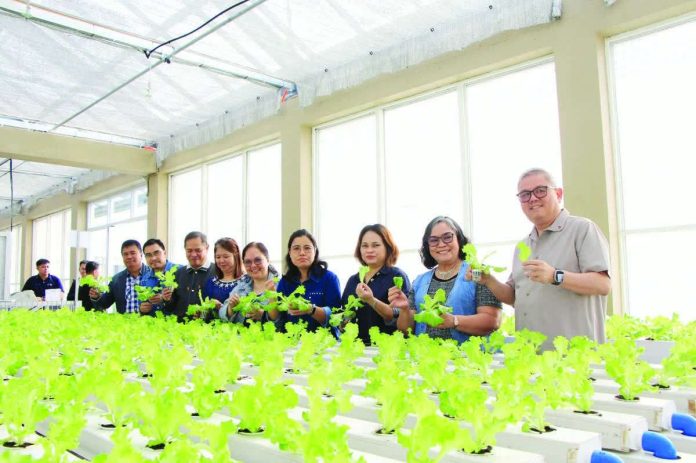
THE DEPARTMENT of Agriculture (DA) is set to expand its “White Revolution” program, aiming to modernize vegetable and high-value crop production through greenhouses, organized food corridors, and improved post-harvest facilities, following the government’s approval of a higher budget for the agriculture sector this year.
Agriculture Secretary Francisco Tiu Laurel Jr. said the DA’s “White Revolution” would ensure a stable, year-round supply of affordable vegetables and high-value crops to help address issues in food production during the El Niño and La Niña weather disturbances.
“Nadagdagan iyong budget namin for greenhouses, so that will address iyong heavy rain and possible slight drought,” Tiu Laurel said during a Palace press briefing on Thursday, January 8.
“So, we need more of this, ang tawag ko dito is ‘White Revolution’ and full scale nito actually is 2027. We need more of this controlled atmosphere na greenhouses in order to be able to produce (vegetables) even through heavy rainfall or through lack of water naman. So, iyon ‘yung kailangan natin ma-develop,” Tiu Laurel stressed.
Tiu Laurel cited South Korea’s 50,000 hectares of greenhouse facilities to support its food production, while the Philippines currently has only 500 hectares of greenhouse facilities.
He said expanding greenhouse farming is a long-term solution to strengthen local agricultural productivity and food security.
“So, that is the solution, long-term solution natin is iyong greenhouse or what you call ‘White Revolution,” Tiu Laurel said.
According to the DA, the term “White Revolution” was inspired by the white plastic films used in greenhouses, mulch, and tunnels — technologies that transformed vegetable farming in South Korea between the 1970s and 1990s.
The DA has scheduled infrastructure and equipment procurement to begin by late 2025, with the first food corridors expected to be operational by the second half of 2026. (PND)/PN