

MANILA — The Department of Budget and Management (DBM) mounted a strong defense of the unprogrammed appropriations in the proposed 2026 national budget, saying their constitutionality has already been settled by the Supreme Court and warning that fresh legal challenges ignore established jurisprudence.
DBM’s statement came after Cong. Edgar Erice and Cong. Leila de Lima filed a petition before the High Court seeking to nullify Section XLIII of the 2026 General Appropriations Act (GAA), which covers unprogrammed appropriations.
The petition asks the Court to declare the provision unconstitutional and to issue a temporary restraining order and a writ of preliminary injunction to stop the release and use of the funds, citing alleged constitutional violations and the risk of irreparable harm.
While acknowledging the right of lawmakers and private individuals to seek judicial review, the DBM stressed that the legality of unprogrammed funds has been “categorically ruled” upon by the High Court.
The agency cited the Supreme Court’s October 8, 2019 decision in Belgica vs Executive Secretary, which upheld the constitutionality of unprogrammed appropriations.
“The Court clarified that the Unprogrammed Appropriations are not a prohibited lump-sum fund, because they are accompanied by an annex that specifies the public purposes and corresponding amounts for which the funds may be used. As such, the UA complies with the constitutional requirement that appropriations must have a discernible purpose,” the DBM said.
“Taken together, Supreme Court jurisprudence and the design of the FY 2026 GAA demonstrate that the Unprogrammed Appropriations are constitutional, clearly defined, and now subject to even tighter fiscal discipline and safeguards,” it added.
The DBM reiterated its commitment to constitutional governance, transparent public finance, and accountable implementation of the national budget.
It explained that unprogrammed appropriations function as standby funding that may only be sourced from excess or windfall revenues and can be released solely after specific fiscal conditions and validation processes are met.
“This design, according to the Court, is a legitimate budgeting mechanism that allows fiscal flexibility while preserving Congressional control over public funds,” the DBM said.
The agency also underscored that unprogrammed appropriations for 2026 were reduced to P150.9 billion from P363.4 billion in 2025, describing the current level as “well below [levels] recorded during the pandemic years.”
Unprogrammed funds peaked at P807.2 billion in 2023, compared with P251.6 billion in 2022, before declining to P731.4 billion in 2024.
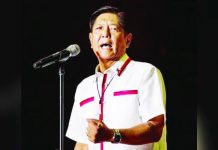
Citing Ferdinand R. Marcos Jr., the DBM said releases remain subject to strict controls to prevent misuse or discretionary spending.
“Releases may only be made when fiscal conditions are met and after careful validation,” the DBM said.
“To reinforce this discipline, the President vetoed approximately PHP92.5 billion worth of proposed UA items, including budgetary support to GOCCs, prior years’ LGU shares, personnel services requirements, industry support programs, insurance of government assets and interests, and certain government counterpart funds.”/PN