


ILOILO – The National Historical Commission of the Philippines (NHCP) has warned of possible structural risks at the centuries-old Cabatuan Catholic Church and is pushing for immediate detailed engineering studies and soil investigation to determine the extent of damage believed to be linked to recent earthquakes in Panay Island.
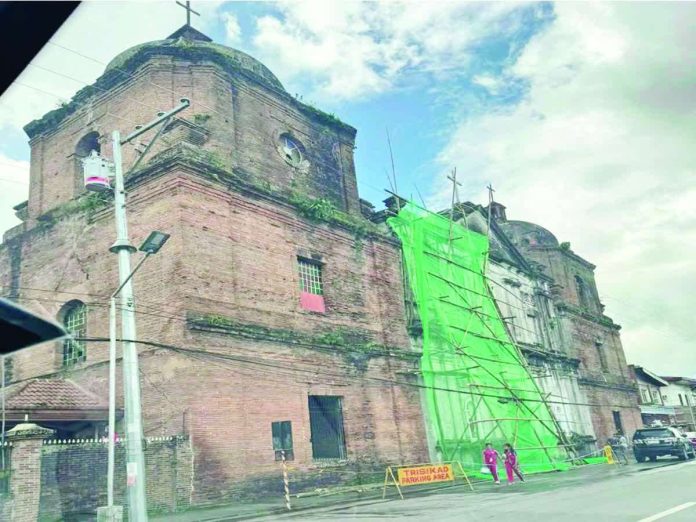
In a letter dated January 12 to Cabatuan parish priest Msgr. Benjamin Molina, NHCP chair Regalado Trota Jose said initial findings point to potential foundation issues, citing visible cracks on the church façade that may be rooted in soil instability beneath the structure.
“Based on our initial findings, the vertical cracks observed on the façade indicate a possible issue with the soil on which the church’s foundations were built,” Jose said.
The NHCP stressed that comprehensive technical assessments are necessary to accurately determine the structural condition of the neoclassical church, regarded as the largest brick structure in Western Visayas.
Pending the studies, the commission advised church officials to install barricades along the façade, reroute traffic, and limit vibrations from passing vehicles to ensure pedestrian safety.
The recommendations came after several incidents of spalling and falling debris were reported in late November 2025, following a series of earthquakes that struck Panay Island.
These incidents prompted the NHCP to dispatch an inspection team to the site on December 17, 2025 led by Architect Reynaldo Lita, the commission’s chief restoration architect and head of its Historic Preservation Division.
The team met with Cabatuan Mayor Elizalde Pueyo and Msgr. Molina during the visit.
The site inspection was also initiated after the National Commission for Culture and the Arts (NCCA) formally requested NHCP intervention in a December 9, 2025 letter, citing reports of falling debris from the church façade and belfry.
The NCCA said the issue reached national attention after Iloilo Provincial Government Public Information and Community Affairs Office chief Jose Nereo Lujan posted photos and details of the situation on social media while seeking expert guidance.
“The subject cultural property is neither the work of a National Artist nor has it been previously declared as a National Cultural Treasure or Important Cultural Property. Furthermore, since it is a Spanish-colonial period church, the property is over 50 years old, we deemed it necessary to refer the matter to your office, considering your expertise and jurisdiction over such matters. We shall appreciate your direct correspondence to Mr. Lujan over this matter moving forward,” NCCA deputy executive director Bernan Joseph Corpuz said.
Built in 1866 and dedicated to San Nicolas de Tolentino, the Cabatuan Catholic Church is believed to have sustained damage aggravated by recent seismic activity, with authorities noting widening cracks on the right belfry tower that are suspected to be earthquake-related./PN