



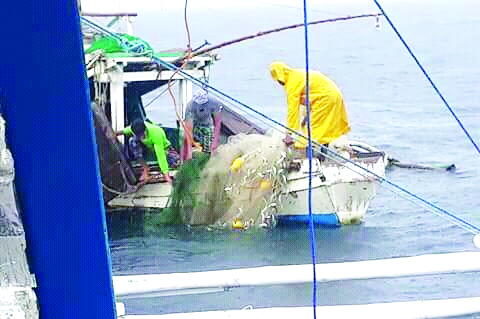
ILOILO — Alarmed by the continuing depletion of fish stocks in the Visayan Sea, the Department of Agriculture’s Bureau of Fisheries and Aquatic Resources (BFAR) Region 6 has reaffirmed its stand against the use of prohibited fine-mesh fishing nets, warning that unchecked violations will further worsen illegal, unreported, and unregulated (IUU) fishing in municipal waters.
BFAR-6 regional director Remia Aparri, together with Concepcion’s Mayor Milliard Villanueva, met with members of the Concepcion Sinsoro Owners and Operators Association (CONSOOA) on January 9 to address the continued operation of “sinsoro” fishing, a method that uses fine-meshed nets banned under existing fisheries regulations due to their destructive impact on marine resources.
Studies and field assessments presented during the dialogue showed that “sinsoro” fishing, classified as an active fishing gear, results in the widespread capture of juvenile fish and non-target species, accelerating the decline of fish populations and threatening long-term food security and livelihoods in the region.
The meeting focused on balancing possible livelihood support for affected fishers with strict compliance with fisheries laws, particularly the Fisheries Management Area 11 harvest strategy, which expressly prohibits fine-mesh nets to allow fish stocks to recover, especially in pilot areas such as Concepcion.
Villanueva assured fishers of continued dialogue while stressing the duty of local governments to protect municipal waters.
“The office of the mayor is always open to discussions, whether for individuals or groups,” Villanueva said.
He emphasized that marine protected areas serve as nurseries for juvenile fish and that firm enforcement of fisheries regulations is essential to curb overfishing and habitat destruction.
BFAR technical staff Jessa Mae Teodosio presented updates on the status of local fisheries resources, particularly the lobo-lobo fishery, a traditional livelihood in Concepcion. Maria Aimee Sobrevega, meanwhile, outlined a timeline of engagements among BFAR, the local government, and sinsoro operators, showing sustained efforts toward resolving the issue through consultation and gradual transition.
Aparri underscored the shared responsibility of government and fisherfolk in safeguarding marine ecosystems.
He said fishing practices adopted today will determine the future of fisheries resources, urging stakeholders to work together to ensure sustainability.
CONSOOA members committed to internal consultations to identify alternative projects consistent with fisheries management plans, including legal fishing methods, sustainable gear, aquaculture, and other fisheries-based livelihood options.
The January 9 dialogue builds on discussions that began in July 2023, when BFAR-6, in partnership with Northern Iloilo State University and the Iloilo Provincial Agriculture Office, secured commitments from stakeholders to gradually phase out fine-meshed fishing gears.
BFAR-6 said the ongoing actions are aligned with Section 93 of the Amended Fisheries Code of the Philippines, which restricts the use of fine-mesh nets to limited purposes to prevent the capture of juvenile fish and support stock recovery in the Visayan Sea.
Officials stressed that sustained enforcement and cooperation will be critical in curbing IUU fishing and protecting the future of Concepcion’s fisheries./PN