


ILOILO City – A newly rehabilitated Doppler radar facility worth P176.6 million has been activated here, dramatically strengthening the country’s ability to track severe weather across Western Visayas and nearby regions, as the Department of Science and Technology – Philippine Atmospheric, Geophysical and Astronomical Services Administration (DOST‑PAGASA) simultaneously broke ground for a new synoptic weather station to further upgrade forecasting capabilities.
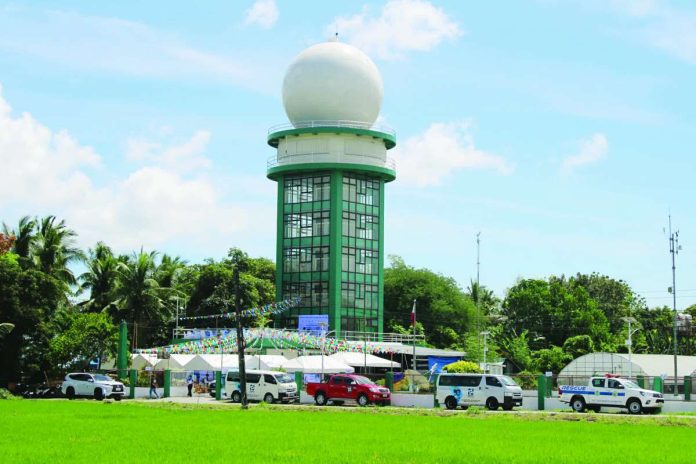
The Iloilo Radar Facility, located at the PAGASA Iloilo Complex Station in Barangay Buntatala, Jaro district, was officially inaugurated on March 6 alongside the groundbreaking of a P10‑million Iloilo Synoptic Station at the Iloilo International Airport in Cabatuan town.
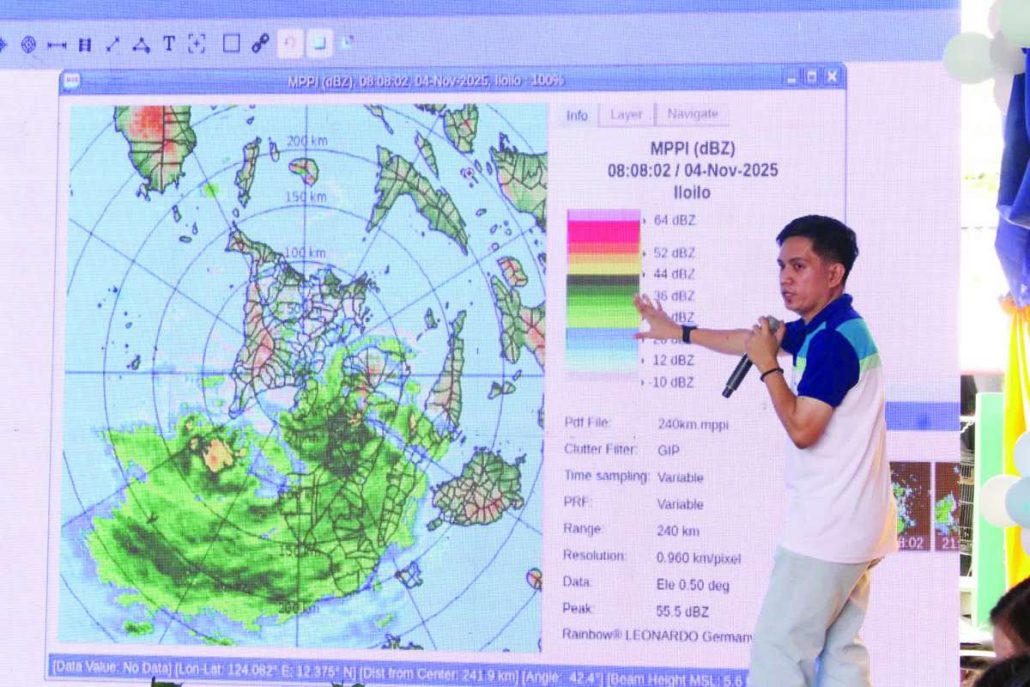
Equipped with an advanced dual‑polarimetric Doppler radar operating in the S‑band frequency range, the facility can monitor weather systems up to 480 kilometers away, significantly improving the tracking of torrential rains, thunderstorms, and tropical cyclones across the Visayas and surrounding areas.
“The Iloilo Doppler radar has the capability to observe weather patterns not only in Iloilo but also in other provinces in the Visayas, parts of Southern Luzon, and even Mindanao,” said Department of Science and Technology secretary Renato Solidum Jr.
Solidum emphasized that the radar’s real‑time weather data will play a crucial role in helping local governments anticipate and respond to extreme weather events.
“This data is essential for local governments to make informed decisions and provide proper guidance to communities,” he said.
The radar facility, first established in 2013, became non‑operational in 2021 after major defects were detected.
Following the allocation of rehabilitation funds in 2023, the system was restored and became fully operational again in November 2025.
According to PAGASA administrator Dr. Nathaniel Servando, the upgraded radar significantly improves the agency’s ability to detect developing weather disturbances and issue earlier warnings.
“We can track rainfall and monitor developing weather systems, providing earlier and more accurate warnings,” Servando said. “When communities are prepared, we can ensure safer lives and livelihoods.”
Servando noted that the new radar uses advanced German technology, replacing the previous system manufactured in the United States.
Solidum explained that replacing aging meteorological instruments is necessary to maintain reliable forecasting systems.
“Lahat po ng instrumento, may kamatayan, wala pong instrumento na tuloy-tuloy lang. At some point PAGASA has to replace the old,” he said.
Alongside the radar inauguration, PAGASA also broke ground for the new Iloilo Synoptic Station at the Iloilo International Airport, which will continuously measure key atmospheric conditions such as temperature, rainfall, wind speed, and air pressure.
Servando said the facility will provide hourly meteorological updates crucial for aviation safety and weather forecasting.
“While these measurements might seem straightforward, they are the building blocks for all forecasts we produce. Accurate observations are essential for reliable forecasting; without them, effective disaster preparedness is unattainable,” he explained.
“This is vital for airport operations for safety of the aviation transport sector,” Servando added.
Iloilo City’s Mayor Raisa Treñas welcomed the modernization of weather monitoring facilities, stressing that more precise and localized data would help authorities respond faster to disasters.
“With better, localized weather information, we can make clearer decisions for our people. We can preempt flooding and protect lives and livelihoods before damage becomes severe,” Treñas said.
“Reliable weather monitoring means greater confidence for our locals and visitors,” she added.
Officials said the two projects are part of PAGASA’s broader push toward impact‑based forecasting, a system that translates meteorological data into practical warnings and guidance for communities and critical sectors.
With upgraded monitoring infrastructure and stronger collaboration with local governments, PAGASA aims to improve disaster preparedness and climate resilience across Western Visayas and neighboring regions./PN