

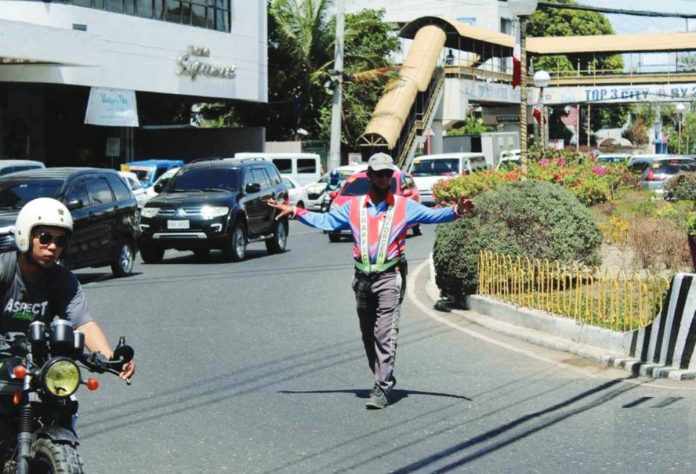
ILOILO City – Traffic enforcers here will be granted “heatstroke breaks” as temperatures rise toward the peak of the summer season, with the city government prioritizing the protection of personnel who spend hours directing traffic under the scorching sun.
The Iloilo City Traffic and Transportation Management Office (ICTTMO) confirmed it will again implement the annual program aimed at reducing heat exposure among traffic personnel, particularly those with underlying health conditions who are more vulnerable to extreme heat.
“Yes, we will implement the heatstroke break again this year. I have already advised our administration about this program,” said ICTTMO head Uldarico Garbanzos.
The measure comes as authorities anticipate intense summer heat that could expose roadside personnel to heat-related illnesses, including heat exhaustion and heatstroke.
Garbanzos said the initiative is a recurring preventive program carried out every dry season when temperatures rise and the risk of heat waves increases.
“We are already preparing for the summer season. We requested vitamins and supplements for our personnel because we are anticipating the heat waves that usually come during summer,” Garbanzos said.
As part of the preparations, the office has coordinated with city health authorities to secure vitamins and other supplements for traffic enforcers.
The ICTTMO is also organizing a medical mission targeting personnel with existing health conditions. According to Garbanzos, more than 100 traffic personnel have been identified as having comorbidities and will be prioritized for health check-ups.
“More than 100 of our personnel have comorbidities. They will be the priority for our medical mission and the supplements we requested,” Garbanzos said.
“Our personnel are exposed not only to heat but also to pollution every day, so we need to strengthen their health protection,” he added.
Under the heatstroke break scheme, traffic enforcers will remain at their assigned posts but will be allowed to take short breaks in shaded areas nearby to minimize prolonged exposure to direct sunlight.
“They cannot leave their duty stations, but they can take shelter nearby while continuing to monitor traffic,” Garbanzos explained.
However, enforcers are still expected to immediately respond to road situations requiring active traffic control.
“Unless there is a traffic accident or a major traffic situation, that is the time they will step out and conduct traffic control in the middle of the road,” he said.
Most traffic enforcers in the city work from 6 a.m. to 2 p.m., placing them outdoors during the period when temperatures are typically at their highest.
“Our personnel are on duty from six in the morning until two in the afternoon. That means they are directly exposed to the strongest heat around midday,” Garbanzos said.
Shaded areas such as spots with trees or nearby structures will be designated as temporary rest points where enforcers can remain visible while avoiding prolonged exposure to direct sunlight.
Even while taking shade breaks, Garbanzos emphasized that traffic personnel must stay alert and ready to respond whenever traffic conditions require their presence on the road./PN