


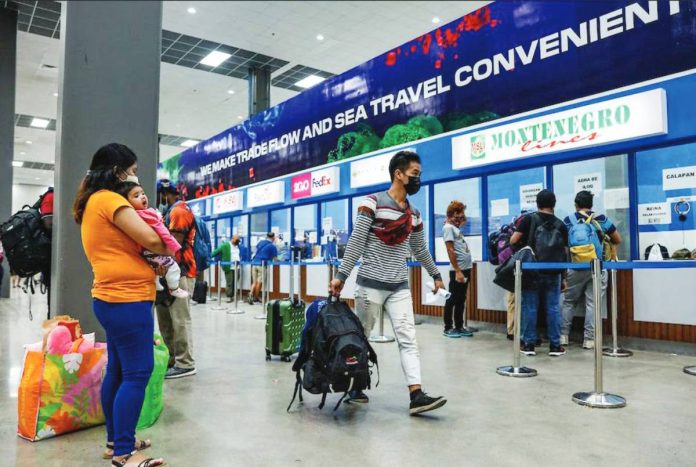
A 20-PERCENT ceiling has been set for the expected hike in maritime transport fares, the Maritime Industry Authority (MARINA) said on Monday, March 16, as the Philippines braces for another double-digit spike in fuel prices this week.
The fare adjustment will be applicable to both passenger and cargo vessels, said MARINA spokesperson Louie Delos Santos.
“We are in a very challenging situation dahil 40-60 percent ng operational cost ay napupunta sa krudo,” he told state television PTV. “Nasa 17-20 percent ang puwede nating ipataw [na increase] pero ginawa namin na 20 percent kasi volatile din ang presyo ng mga gasoline.”
The MARINA has also urged ship owners to implement other measures to avoid passing the charges to travelers and save more gasoline, Delos Santos said.
“Ang minumungkahi natin na kung puwedeng ‘yung paggamit ng passenger ships baka puwedeng i-consolidate natin ang mga biyahe para mama-maximize natin,” he said.
He added: “Kung ang shipping company may lima na biyahe, baka puwede niyang gawing tatlo para ma-maximize ‘yung space,” he said. rattle
The government is also studying options that would “optimize the routes through digitalization,” the official said.
The agency will also be issuing show-cause orders against companies that overcharge passengers or go beyond the fare hike ceiling, he said.
The movement of oil supplies from the Middle East has been disrupted since early March after Iran attacked oil mills and refineries in retaliation to airstrikes from US and Israeli forces.
Tehran has also blocked the Strait of Hormuz — where 20 percent of the world’s oil supply passes through — as part of its strategic actions against Washington and Tel-Aviv. (ABS-CBN News)