



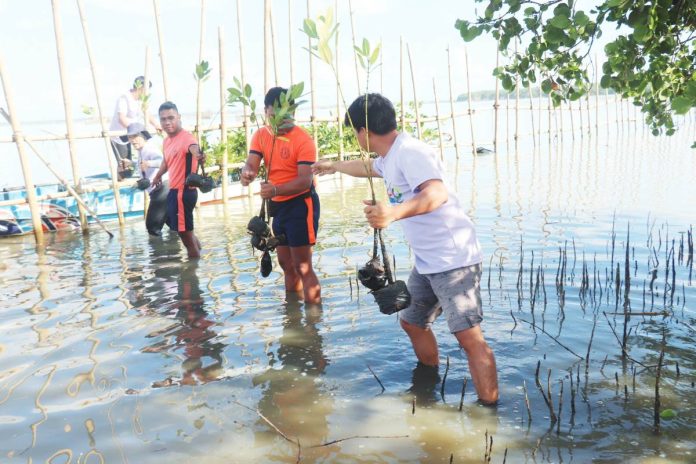
CAPIZ — The Provincial Government of Capiz has intensified its environmental conservation efforts with a large-scale mangrove rehabilitation activity in Barangay Quijo on March 17.
Led by Gov. Fredenil H. Castro, the initiative gathered community volunteers and environmental advocates who planted more than 700 mangrove seedlings along the coastal area.
The activity, held in line with the celebration of National Women’s Month, highlighted the vital role of women and communities in environmental stewardship.
Aside from mangrove planting, participants also conducted a coastal clean-up drive, reinforcing the importance of combined efforts in restoring and protecting marine ecosystems.
The event drew participation from barangay officials, personnel from the Municipal Environment and Natural Resources Office (MENRO) headed by Hansel Bereber, members of the Philippine Coast Guard, and staff of the Capiz Provincial Environment and Natural Resources Office (CaPENRO).
Also present was Lalaine Young, who played a key role in organizing the activity.
In his message, Castro underscored the importance of mangroves in protecting coastal communities.
“Mangroves are not just trees; they serve as natural barriers against coastal erosion and help prevent siltation in our waterways. Our efforts today go beyond beautifying shorelines—they reflect our commitment to a healthier and more sustainable environment,” he said.
The initiative also aims to shift public perception of mangroves—from being seen as obstacles to development to being recognized for their ecological value, including supporting fish biodiversity, improving water quality, and serving as habitats for marine life.
Through the project, the provincial government hopes to strengthen community engagement and promote long-term environmental sustainability across coastal areas./PN