


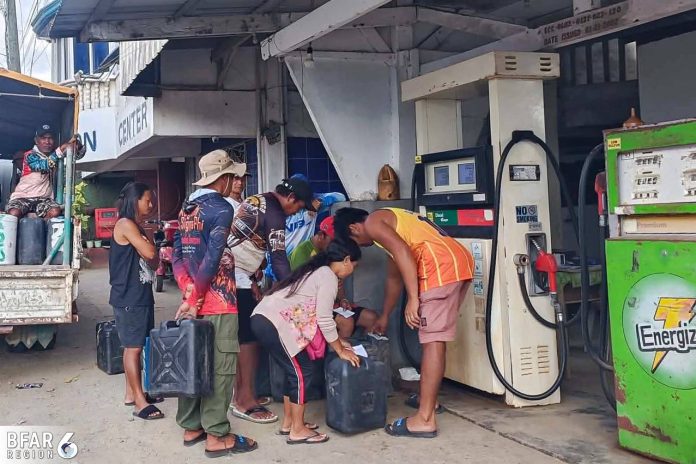
ILOILO — A coordinated “boatpool-to-pump” system enabled nearly a hundred fisherfolk from remote island barangays in Ajuy town to finally access long-delayed fuel subsidies, offering immediate but short-term relief as soaring fuel prices continue to choke small-scale fishing operations.
The Department of Agriculture – Bureau of Fisheries and Aquatic Resources in Western Visayas (DA-BFAR), in partnership with local government units, distributed fuel vouchers to 97 fisherfolk from barangays Pantalan Nabaye, Nasidman, and Tagubanhan from March 30 to April 1, 2026.
The breakthrough came through an organized transport effort, where beneficiaries “boatpooled” from their island communities to the mainland, with LGUs providing logistical support to ensure they could claim their subsidies at designated fuel stations.
For fisherfolk long burdened by rising fuel costs, the assistance offers a crucial pause from daily expenses that have forced many to scale back operations.
“This will really help us,” said Evelyn Montañiel of the Barangay Tagubanhan Kasagan Association (BATAFA).
“We can use the fuel for a week, which in turn helps us save money for our household needs,” she added.
Each beneficiary received a fuel subsidy worth P3,000 — enough to sustain fishing activities for five to seven days — providing temporary breathing room for families who typically consume around 132 liters of fuel monthly.
The impact is especially significant as many fisherfolk have resorted to fishing every other day and avoiding deeper waters to cut fuel costs, often at the expense of smaller catches and reduced income.
For Ronelia Ferrer, 41, the subsidy translates directly into savings.
“This help is huge because we won’t spend on fuel for a week. We can finally save a bit,” she said.
Still, fisherfolk underscored that the assistance, while welcome, is only a short-term solution to deeper economic pressures, particularly during “lean months” when fish prices drop and earnings shrink.
Mhark Nicus noted the importance of maximizing the subsidy and strengthening coordination among stakeholders to sustain the gains.
Montañiel echoed this call for collective action, saying, “Let’s help each other — fisherfolk, BFAR, and LGU — to deliver services effectively and support the fisheries sector.”
The initiative highlights how targeted coordination between national agencies and local governments can bridge logistical gaps and deliver aid to geographically isolated communities — though questions remain on how long such relief can offset the persistent volatility of fuel prices./PN