

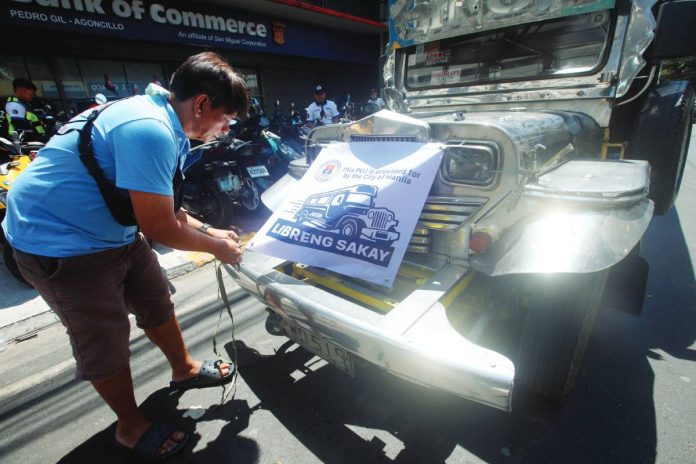
MANILA — The government is rolling out a nationwide service contracting program covering nearly 50,000 public utility vehicles (PUVs) starting April 15, in a major intervention aimed at shielding commuters and transport workers from the worsening impact of surging fuel prices.
President Ferdinand “Bongbong” Marcos Jr. announced the move following approval by the UPLIFT Committee, positioning the program as a direct response to mounting pressure on both fares and transport supply triggered by global oil disruptions.
Under the scheme, PUV drivers and operators will receive additional payments ranging from PHP40 to PHP100 per kilometer on top of their regular fare income, while commuters are expected to benefit from at least a 20-percent fare discount.
“Ipapatupad ito sa buong bansa at inaasahang sasaklaw sa halos 50,000 PUV, 1,000 operator at hanggang 15 milyong pasahero,” the President said.
The program will prioritize routes linked to train systems and major bus corridors, in a bid to maximize efficiency and ensure smoother connectivity for passengers navigating urban transport networks.
Authorities said the service contracting will be implemented during off-peak hours to guarantee the availability of rides even beyond rush periods — an issue that has long plagued commuters amid fluctuating fuel costs.
To ensure compliance and service quality, participating vehicles will be monitored through Global Positioning System (GPS) tracking.
The initiative revives the pandemic-era service contracting model that previously supported the transport sector, but is now recalibrated to address the current fuel-driven crisis affecting mobility nationwide.
The rollout comes as the Philippines grapples with an energy emergency fueled by supply disruptions tied to escalating geopolitical tensions abroad, further straining both transport operators and the commuting public./PN