



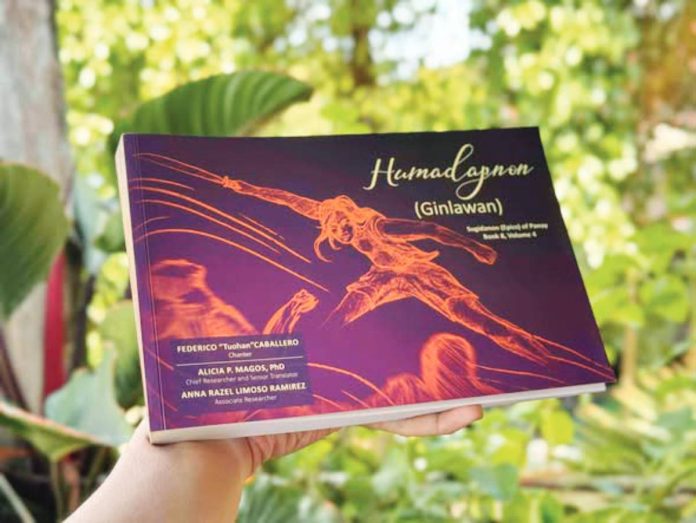
ILOILO — Long before ink met paper, before awards and citations, there was only a voice.
A chant, carried across generations, echoing through the mountains of Panay — fragile, fleeting, yet enduring. Today, that voice has found permanence. And in doing so, it has made history.
The national recognition of “Humadapnon (Ginlawan): Sugidanon (Epics) of Panay” at the 43rd National Book Awards – Best Book of Poetry in Hiligaynon and Kinaray-a during ceremonies held March 14, 2026 – is a literary triumph and more. It is the culmination of a decades-long cultural mission — one that stitched together memory, scholarship, and identity into a single, enduring volume.
A Story Once Spoken, Now Safeguarded
At the heart of Ginlawan is a tradition that was never meant to be read — but to be heard.
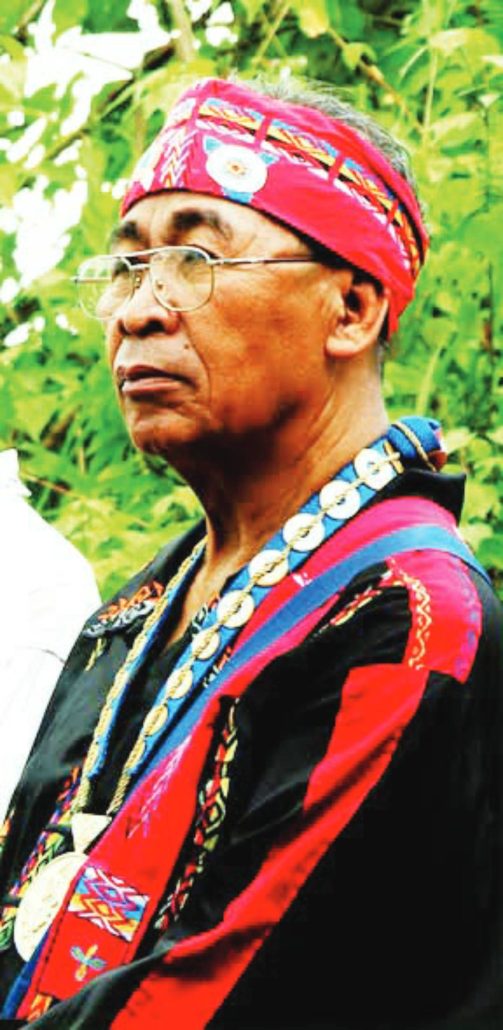
For generations, the Panay Bukidnon people preserved their epics through oral chanting, a delicate chain of memory passed from master to apprentice. Chief among these bearers is Gawad Manlilikha ng Bayan awardee Federico Caballero, whose voice gave life to the epic of Humadapnon, a tale steeped in heroism, love, and the supernatural.
But oral traditions, however resilient, are vulnerable. Time, migration, and modernity threaten to silence even the strongest voices.
That is why Ginlawan matters.
Published by the University of the Philippines Press, the book transforms a once-ephemeral tradition into a permanent cultural record — without stripping it of its soul.
The Long Road to Preservation
The story behind the book is, in itself, an epic.
The journey began in 1993 in Calinog, Iloilo, when UP Visayas Professor Emeritus Dr. Alicia Magos and Anna Razel Limoso-Ramirez set out to document the Sugidanon tradition. What followed was not a simple research project, but a lifelong commitment.
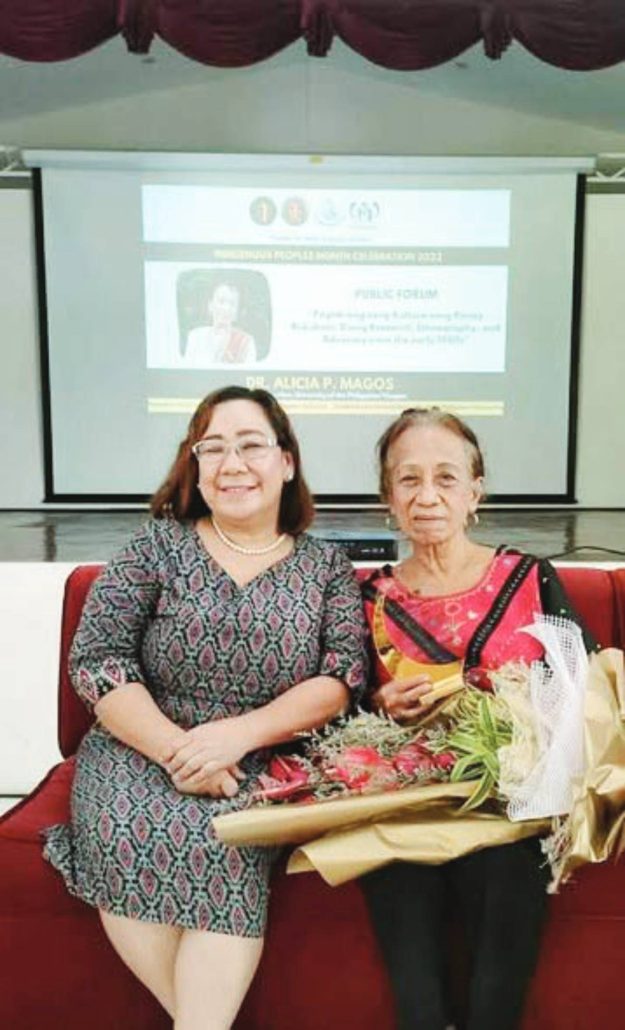
They worked hand-in-hand with the Panay Bukidnon community — listening, recording, translating, and safeguarding.
Along the way, a network of contributors emerged: cultural bearers, translators, editors, and families whose lineage is inseparable from the epic tradition itself – Romulo Caballero, Anna Caballero, Professor Eliodora Dimzon, Analina Caballero, Teresita Quezon, Agnes Dimzon, Adonis Rebong, Professor Ma. Joji Tan, Jemelie Limoso, and members of the Caballero family.
The manuscripts, safeguarded for years at the UP Visayas Center for West Visayan Studies, were later prepared for publication through institutional support from UP leadership.
Collective effort ensured that the work remained not just accurate, but ethical — grounded in respect, authorship, and rightful ownership. Even royalties, by design, benefit the very community whose heritage fills its pages.
Bridging Worlds, Languages, and Generations
What sets Ginlawan apart is its remarkable accessibility without compromise.
The epic is presented in four languages: the original chanting language, contemporary Kinaray-a, Filipino, and English. This layered approach allows the story to travel — across regions, across generations — without losing its cultural essence.
It is, in many ways, a bridge.
A bridge between the elders who remember and the youth who are just beginning to listen. A bridge between the past and a future that risks forgetting.
And crucially, it is not the end of the journey.
Efforts continue through initiatives like the Balay Turun-an, or School for Living Traditions, where younger members of the community are taught the epics—not from books alone, but through the living practice of chanting. Digitization projects are also expanding the reach of these stories, ensuring they are not confined to archives but shared with the world.
The Epic Within the Epic
At the core of the award-winning work is the epic tale of Humadapnon, one of the central culture heroes in the Sugidanon tradition of the Panay Bukidnon.
The story follows Humadapnon as he embarks on a perilous sea journey in search of another wife. During his absence, tragedy strikes when another man takes his wife, Malitong Yawa — a binukot or well-kept maiden revered in the community.
The conflict leads to her death, but the narrative does not end there. Through the gahum, or supernatural power, of Humadapnon’s sister, Malitong Yawa is brought back to life, reflecting the epic’s deep connection to spiritual beliefs and the supernatural world.
More than a tale of adventure and loss, the story encapsulates the values, social structures, and cosmology of the Panay Bukidnon people, offering insight into their understanding of heroism, kinship, and the unseen forces that shape human destiny. It is a narrative rich in symbolism — of loss and redemption.
But beyond the plot lies something deeper.
The epic encodes the worldview of the Panay Bukidnon people — their beliefs, their social structures, their understanding of the unseen. It is not just a story. It is a map of identity.
A Legacy Secured
The National Book Award recognizes Ginlawan as a landmark of literary excellence and cultural authorship, praising its linguistic precision and emotional depth. But perhaps its greatest achievement lies beyond accolades.
It ensures that the voice of the past will not fade.
That the chant will not be silenced.
That the story of Humadapnon — once carried only by breath and memory — will continue to be told, studied, and celebrated.
Because in the end, preserving an epic is itself an epic endeavor.
And in Ginlawan, that endeavor has found its triumph. (Rex J. Maestrecampo/PN)