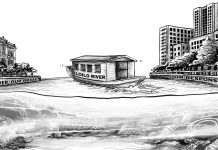




THERE ARE moments in life when a simple school program turns into something deeper — a quiet realization, a gentle reminder, or even a humorous awakening. Recently, while attending a recognition ceremony at a local school in Guimaras, I found myself smiling, clapping, and — unexpectedly — reflecting.
Watching young learners walk across the stage with pride, I could not help but think: So this is where sleepless nights, endless lesson plans, and countless “Please pass your papers” eventually lead. As a teacher, you measure time differently — not in hours or paychecks, but in progress — one student, one lesson, one small breakthrough at a time. And sometimes, in the middle of applause and proud parents, you are reminded why you chose this path in the first place.
I was reminded of a timeless piece that beautifully captures the heart of teaching — the idea that being an educator is not merely a profession, but a calling.
There are many honorable careers in the world. A salesman may earn more, offering products that fill homes and satisfy needs. Yet a teacher offers something less visible but far more lasting — ideas that shape thinking and guide decisions.
An office worker may sit behind an elegant desk, drafting letters that move businesses forward. But a teacher helps write something far greater — the future of a child.
Architects design buildings that stand tall through time, and artists create works that inspire the eye. Yet teachers build character and leave lasting impressions on young minds — creations that endure far beyond physical structures or canvases.
Even those who work with numbers — bookkeepers, executives, and professionals — contribute to the order of society. But teachers help bring balance not only to accounts, but to lives. They nurture values, discipline, and purpose.
Musicians may stir emotions through melody, and speakers may move audiences with powerful words. Yet teachers reach a deeper place — the heart of a learner — guiding them toward sound choices and meaningful aspirations.
This reflection brings me back to a poem written by Elva Zachrisch in October 1958. I copied it into my journal at the WVSU library when I was a second-year education student — a piece that has stayed with me through the years.
I would rather be a teacher than a salesman. Though a salesman makes far more money than I do, I would not change places with him. For he sells washing machines and fountain pens and cars and other material things, but I sell ideas.
I would rather be a teacher than a stenographer, even though a stenographer may sit at a mahogany desk in the magnificent offices of some great chief of industry. For he helps write letters, but I help write careers. He touches keys, but I touch lives.
I would rather be a teacher than an architect, satisfying as the program of large constructions might be. For an architect helps build edifices, but I help build character. Edifices endure for a time, but character endures throughout eternity.
I would rather be a teacher than an artist, fascinating as that field may be in its wealth of beauty, color, and symmetry. For an artist paints pictures on canvas, but I paint pictures in the memories of little children. An artist makes impressions on tablets of clay, but I make impressions on the soul. (To be continued)/PN