


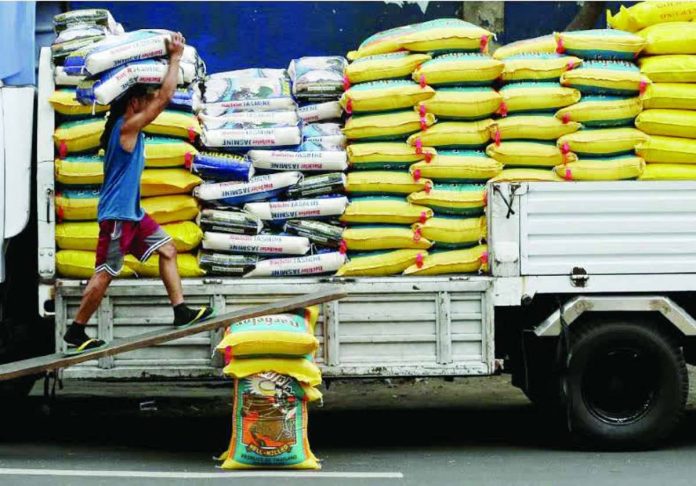
MANILA — President Ferdinand Marcos Jr. on Wednesday issued Executive Order (EO) No. 118, which imposes a temporary price ceiling of P50 per kilo for imported rice.
Under the EO, the mandatory price cap shall be in effect for 30 days nationwide, unless earlier lifted by the President upon the recommendation of the National Price Coordinating Council (NPCC).
Marcos adopted the recommendation made by the NPCC in March to curb “unreasonable price increases” and prevent market abuse amid the price shocks to essential goods caused by the Middle East crisis.
“There is a need for urgent measures to protect consumers by curbing profiteering and other abusive market practices, and to ensure the adequate supply, reasonable pricing, and accessibility of rice for all Filipinos,” he said in EO 118.
Multiagency effort
To ensure the immediate and effective implementation of the EO, the President ordered the Department of Trade and Industry (DTI) and the Department of Agriculture (DA) to ensure the strict and uniform enforcement of the price ceiling, including the monitoring and investigation of abnormal price movements.
The Department of the Interior and Local Government, the Philippine National Police, and other law enforcement agencies shall provide the necessary support to ensure the immediate and effective enforcement of the price cap.
On the other hand, the Bureau of Customs shall conduct inspections and enforcement operations to combat hoarding, smuggling, and illegal importation of rice, including the confiscation, seizure, or forfeiture of smuggled rice, as warranted.
The Philippine Competition Commission, in coordination with the DTI and DA, shall take appropriate measures against cartelization, abuse of dominance and other anti-competitive practices to ensure fair market competition and protect consumer welfare.
Sought for reaction, Federation of Free Farmers national manager Raul Montemayor said in a Viber message that farmers will generally not be affected since harvest season is almost over.
But he pointed out that the actual buying prices of palay (or unmilled rice) could decline if farmers accounted for their added fuel, logistics, and other costs in their pricing.
“Also, if import prices remain low, they will directly affect prices in the wholesale market which also absorbs most of the local rice, and this could lead to lower palay prices even if retail prices remain at P50/kilo,” he added. (Dexter Cabalza © Philippine Daily Inquirer)