


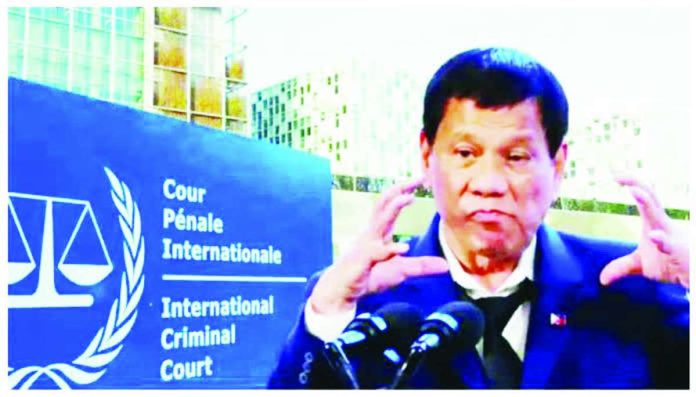
MANILA — Prosecutors at the International Criminal Court (ICC) are pushing to begin the crimes against humanity trial of former president Rodrigo Duterte on Nov. 30, 2026, setting the stage for one of the most closely watched international proceedings involving a former Philippine leader.
In filings submitted ahead of the May 27 status conference before ICC Trial Chamber III, prosecutors said preparations for trial are expected to be completed by Sept. 30 and urged the court to lock in a trial date before the year ends.
“The proposed date for the start of trial will allow the prosecution to efficiently discharge its disclosure and other pre-trial steps… and will consequently likely prevent problems arising during the trial which could cause delay,” the prosecution said.
The prosecution move came as Duterte’s defense team raised concerns over the former president’s deteriorating health, arguing that no trial date should yet be fixed until medical issues are fully assessed.
Lawyers representing victims, meanwhile, urged the tribunal to move even faster by starting proceedings in September 2026, citing both the victims’ right to speedy justice and Duterte’s right to a prompt trial.
However, Duterte’s newly appointed lead counsel Peter Haynes opposed immediately setting a trial date.
“The defense contends that it would be inappropriate to attempt to set a date for the commencement of trial as matters presently stand since certain extraneous and unresolved factors will inevitably bear upon that decision,” Haynes said in a separate filing.
Haynes said Duterte’s condition “continues to deteriorate” and asked the court to allow independent medical experts to examine the 81-year-old former leader before proceedings advance further.
He also urged the court to determine whether Duterte would be required to physically attend hearings, citing the former president’s age and medical condition.
“In light of Mr. Duterte’s advanced age and medical condition, any requirement that he attend hearings in person would likely necessitate significant health-related accommodations,” Haynes said.
The defense further argued that Duterte must remain mentally fit to understand lengthy proceedings, evaluate evidence, and coordinate with his legal team.
“Any significant impairment affecting memory, concentration, or reasoning would seriously prejudice the preparation and presentation of the defense and undermine Mr. Duterte’s ability to participate meaningfully in the proceedings,” Haynes added.
Haynes also requested that English be used as the working language of the proceedings, while witness testimonies be translated into both English and Cebuano for Duterte.
Prosecutors said they plan to present between 60 and 70 witnesses, including as many as 30 who may testify in court.
Expert witnesses may also be called to discuss the political and historical backdrop of Duterte’s anti-drug campaign, police operations, forensic evidence, and statistical analyses related to drug war killings.
The prosecution estimated that direct witness examinations alone could consume between 175 and 200 hours of court time.
Aside from witness testimony, prosecutors also intend to present documentary and audiovisual evidence, including Duterte’s speeches and public statements delivered during his anti-drug campaign.
Duterte has been detained at the ICC detention facility in The Hague since March 12, 2025 while awaiting trial over alleged abuses committed during his tenure as Davao City mayor and later as Philippine president.
The former president has repeatedly denied the allegations and continues to challenge the ICC’s jurisdiction over the case, although the tribunal has ruled that it retains authority over alleged crimes committed before the Philippines withdrew from the Rome Statute in 2019./PN