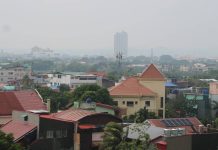




ILOILO City — This southern metropolis sweltered under a blistering heat index of up to 48 degrees Celsius at noon on Monday, May 18, pushing conditions into the “danger” category and heightening fears of an early El Niño episode that could worsen the city’s already intensifying heat spell.
Data from the Iloilo City Operations Center showed the Shell Ungka monitoring station recording the highest heat index at 48°C as of 12 noon, while Shell Villa Arevalo logged around 42°C, based on readings from the Manila Observatory/Shell Automated Weather Stations (AWS) validated by the Iloilo City Disaster Risk Reduction and Management Office (ICDRRMO).
The extreme heat reading placed Iloilo City under the “danger” classification, where prolonged exposure may trigger heat exhaustion, heat cramps, and potentially fatal heat stroke, especially among children, senior citizens, outdoor laborers, and other vulnerable groups.
Authorities said the temperature spike reflects worsening urban heat conditions in the city amid increasing concerns over climate-related risks.
During a recent climate outlook briefing, Meteorologist Patricia Ann Constantinopla of the ICDRRMO said Iloilo City continues to suffer from the urban heat island effect, wherein highly urbanized areas trap more heat than surrounding rural communities.
“Nag-enhance pa gid sang pagbantay ang aton organization tungod sa extreme heat. Ang urban heat island effect amo ang nagapataas sang temperatura sa urban area,” Constantinopla said.
The DRRMO raised alarm over the possible early onset of El Niño, with current climate outlooks indicating a 79% to 80% probability that the weather phenomenon could develop between June next month and August.
Officials warned that the developing El Niño could further intensify heat conditions and worsen dry weather across Western Visayas.
Constantinopla said monitoring already shows warming trends signaling the early formation of El Niño conditions.
She added that the Philippine Atmospheric Geophysical and Astronomical Services Administration (PAGASA) has already begun early drought assessment monitoring following continued below-normal rainfall since mid-April.
Current climate assessments show Iloilo City already experiencing dry conditions, while nearby provinces such as Antique and Guimaras are now under a dry spell, raising concerns over water shortages and possible agricultural damage if the situation persists.
Despite the severe heat, PAGASA’s rainfall outlook still projects near-normal rainfall in Iloilo in the coming months.
However, authorities cautioned that rainfall may come only through isolated afternoon thunderstorms and the possible onset of the southwest monsoon or habagat.
Climate projections further indicate that El Niño conditions may persist until late 2026 or even early 2027 depending on oceanic developments.
Authorities said regular climate advisories and monitoring updates will continue as Iloilo City grapples with the combined threats of extreme heat, worsening dry conditions, and the possible onset of El Niño./PN