


ILOILO City — The Commission on Human Rights (CHR) warned that illegal quarry operations and other forms of environmental destruction amid the worsening climate crisis may already warrant human rights investigations, as officials raised alarm over the growing threat posed to vulnerable communities in Western Visayas.
The warning comes as public outrage continues to mount over alleged illegal quarrying activities in Iloilo province, with environmental groups cautioning that unchecked extraction operations could worsen flooding, intensify disaster risks, and endanger lives as the country braces for stronger weather disturbances and a projected “Super El Niño.”
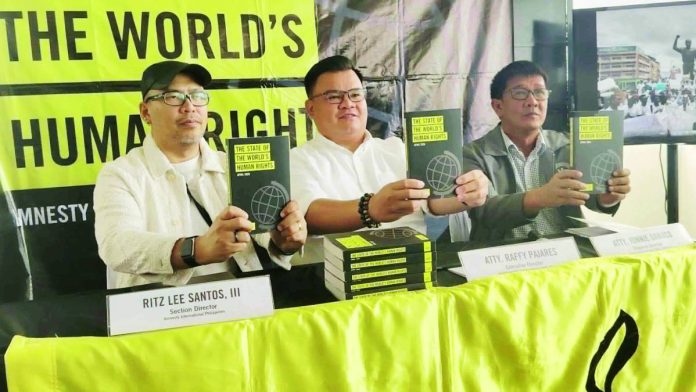
“We are somewhat familiar with this case regarding the alleged illegal quarry operations in Iloilo. However, we do not have specific details at this point. That said, should reports and complaints arise regarding these illegal quarries, we can initiate our own investigations into possible human rights violations,” said Atty. Jonnie Dabuco, regional director of CHR during Amnesty International Philippines’ launch of the State of the World’s Human Rights Report 2025/26 in Iloilo City on May 19.
“Environmental rights are human rights,” Dabuco stressed.
The CHR official said environmental destruction is no longer simply an ecological issue but one that directly affects people’s survival, health, livelihood, and security — particularly among poor and marginalized sectors most exposed to climate-related disasters.
“Environmental rights are interrelated with human rights, much like corruption. With illegal quarrying, we are destroying the environment, which affects us all. I am uncertain about the authorities’ response, but we can certainly inquire further. It seems the issue hinges on whether the existing laws are being properly enforced,” Dabuco added.
He said protecting the environment must now be treated as an urgent collective responsibility as climate-related threats continue to intensify nationwide.
“Sometimes we forget that environmental rights are a part of third-generation human rights. The impact on people’s lives is significant, so protecting the environment must be considered a shared and urgent responsibility,” Dabuco said.
Environmental lawyer Atty. Raffy Pajares, executive director of the Environmental Legal Assistance Center (ELAC), warned that quarrying operations left unchecked could produce devastating consequences for disaster-prone communities.
“If these quarrying operations continue unchecked, we could face devastating ripple effects in communities already vulnerable to natural disasters,” Pajares warned.
Pajares said the threat is compounded by climate forecasts pointing to more severe storms similar to Typhoon Yolanda, alongside extreme heat and erratic weather patterns linked to El Niño and La Niña.
“The issue of quarrying is very relevant and needs to be addressed by the DENR and local governments moving forward. Currently, we are facing not just El Niño but a projected Super El Niño, along with La Niña. We should consider how these conditions can lead to more frequent and stronger storms, similar to what happened with Yolanda. If the areas where quarrying has taken place are not monitored, we can expect various problems to arise,” he said.
Pajares also criticized the lack of transparency surrounding environmental impact assessments and the continued absence of a Freedom of Information law that would allow communities and advocacy groups to access critical environmental data.
“The absence of transparency and the lack of a freedom of information law hinder civil society’s ability to request vital data that could inform the public about the environmental consequences of these projects,” Pajares said.
The forum likewise highlighted broader concerns over the Philippine government’s climate response, disaster recovery shortcomings, and accountability gaps, including unfinished Yolanda housing projects and alleged inefficiencies in the use of disaster recovery funds.
Human rights advocates called on government agencies to strengthen climate adaptation measures, strictly enforce environmental laws, protect environmental defenders, and place human rights at the center of all climate and development policies./PN