



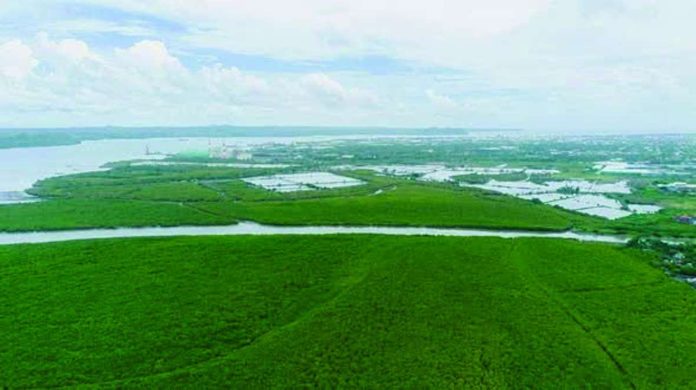
ILOILO City – This city has taken one of its boldest climate resilience measures to date after Mayor Raisa Treñas signed a landmark ordinance establishing a mandatory 100-meter Coastal Greenbelt Zone and placing at least 100 hectares of mangrove forests under permanent protection across the city’s 32 coastal barangays.
The Coastal Greenbelt Zone Ordinance institutionalizes a long-term environmental protection program that prohibits activities damaging to mangrove ecosystems — including unauthorized cutting of mangroves, waste dumping, destructive fishing practices, reclamation, and unauthorized construction — while strengthening the city’s defenses against storm surges, flooding, and coastal erosion.
Treñas said the measure underscores the city’s resolve to balance development with environmental protection.
“We signed the Coastal Greenbelt Zone Ordinance, affirming that progress and environmental stewardship must always go hand in hand. Sa aton matuod nga serbisyo publiko, suporta sang pumuluyo, kag pagbinuligay, we are building a Better Iloilo City for All, where development never comes at the cost of nature,” the mayor said.
The ordinance establishes a mandatory 100-meter coastal greenbelt extending inland from the mean high-water mark throughout the city’s coastal communities. The protected areas include mangrove forests in Jaro, La Paz, and other coastal districts that serve as natural buffers against storm surges, flooding, and coastal erosion while providing vital habitats for marine life.
To ensure science-based implementation, the city government will convene scientists, environmental experts, and other stakeholders to craft the ordinance’s Implementing Rules and Regulations (IRR) and a comprehensive Coastal Greenbelt Management Action Plan.
The measure also reinforces Iloilo City’s existing environmental initiatives, including Project TRANSFORM, by promoting mangrove rehabilitation, blue carbon storage, biodiversity conservation, and climate change mitigation.
It further encourages the active participation of civil society organizations, academic institutions, fisherfolk, and the private sector in protecting and managing the city’s coastal ecosystems.
Treñas also expressed gratitude to the Iloilo City Council for unanimously approving the ordinance and thanked Ilonggos for supporting initiatives aimed at building a more sustainable and climate-resilient city./PN