



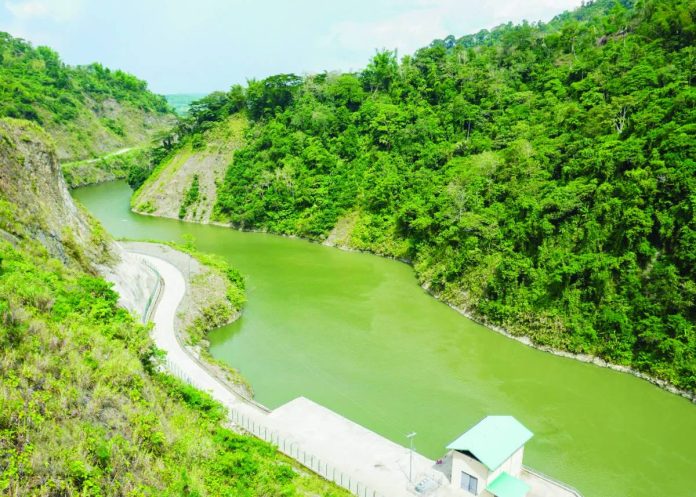
ILOILO City — The National Irrigation Administration (NIA) in Western Visayas is pursuing a government-to-government (G2G) partnership for the bulk water component of the Jalaur River Multipurpose Project Stage II (JRMP II), a move expected to accelerate the delivery of up to 86 million liters of potable water daily to Iloilo as demand continues to rise due to rapid urbanization.
NIA regional manager and JRMP II project manager Engr. Jonel Borres said the proposed G2G arrangement is currently under discussion at the agency’s central office, with the memorandum of agreement (MOA) still being finalized.
“They are still finalizing the memorandum of agreement. Our information from the central office indicates that they are considering a government-to-government arrangement, which is more beneficial for the government and the people,” Borres said.
Borres said specific government entities that could participate in the proposed partnership have yet to be identified, but emphasized that the arrangement is expected to improve efficiency while maximizing public benefits.
The bulk water component of JRMP II is designed to produce approximately 86,400 cubic meters, or 86 million liters, of potable water every day, significantly boosting the water supply for Iloilo City and Iloilo Province as population growth and urban expansion continue to increase demand.
The project is envisioned as a long-term solution to existing potable water shortages while strengthening the region’s water security.
As of June 2026, JRMP II was 86.16 percent complete, with major structures already finished and construction now focused on the remaining irrigation facilities.
The multipurpose project is expected to become fully operational by the first quarter of 2028. Once completed, it will irrigate 31,840 hectares of farmland, benefiting around 25,000 farmers, while increasing annual rice production in the region from 140,000 metric tons to 300,000 metric tons.
Beyond irrigation, JRMP II is expected to play a key role in strengthening Western Visayas’ water infrastructure and is envisioned to transform the region into the country’s first large-scale water reservoir outside Luzon, supporting both agricultural productivity and sustainable regional development./PN